
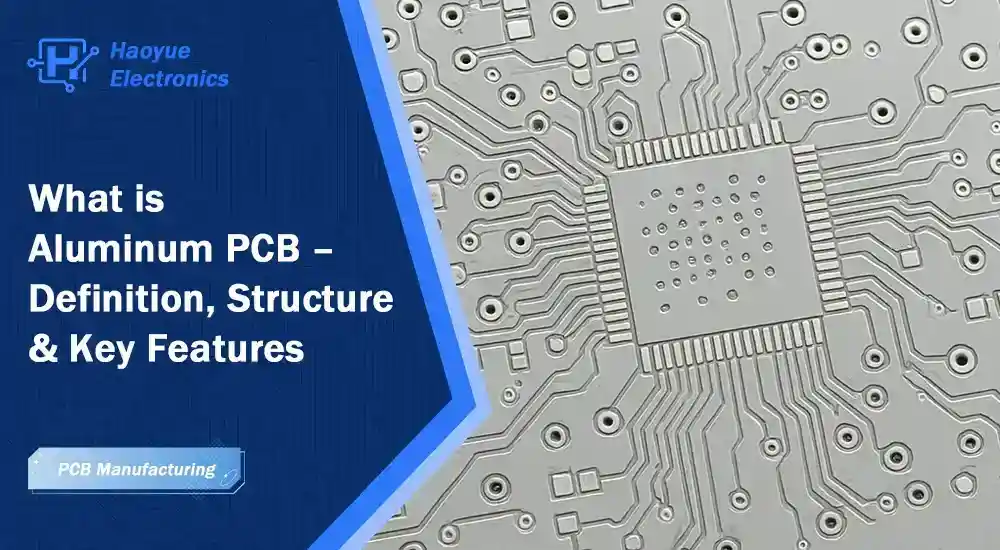
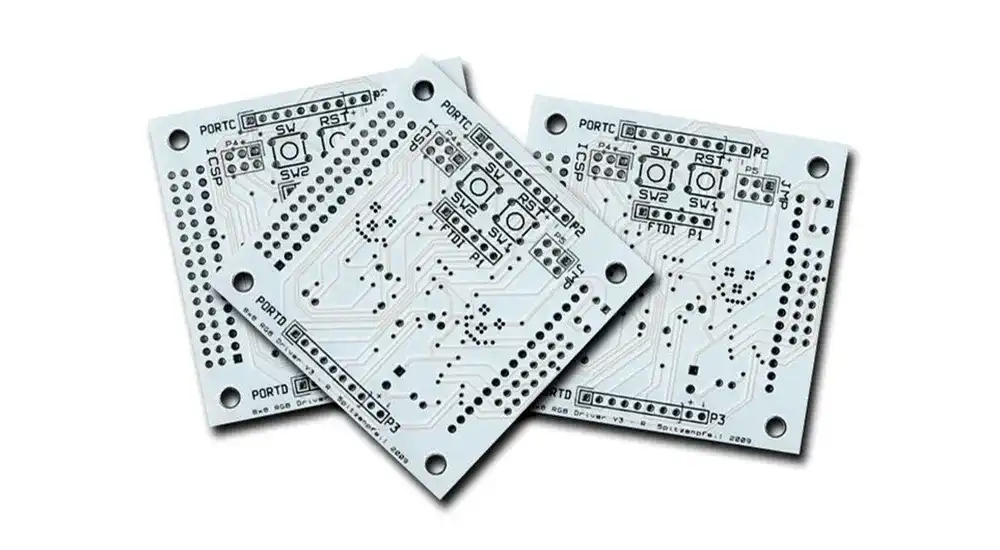
An aluminum PCB is a specialized type of printed circuit board that replaces the traditional fiberglass (FR4) substrate with an aluminum base. This metal-core design significantly improves thermal conductivity, making it widely used in high-power electronics where heat dissipation is critical.
Structurally, an aluminum PCB shares many similarities with standard PCBs—it includes copper circuitry, solder mask, and silkscreen layers. The key difference lies in its aluminum substrate, which provides both superior heat transfer and enhanced mechanical strength, ensuring stable performance in demanding applications such as LED lighting, power electronics, and automotive systems.
Aluminum PCB Definition and Core Characteristics
The aluminum PCB definition encompasses a metal-core printed circuit board where the substrate material incorporates aluminum as the primary thermal management component. Unlike standard FR4 boards that rely on fiberglass composites, aluminum PCBs feature a metal base that actively conducts heat away from critical components.
These boards typically employ single-sided configurations, though double-sided variants exist for specialized applications. Multilayer aluminum PCB construction presents significant manufacturing challenges, limiting their practical implementation in most commercial applications.
The fundamental distinction between aluminum PCBs and traditional circuit boards centers on thermal performance. Where FR4 materials exhibit thermal conductivity ratings around 0.3 W/mK, aluminum substrates achieve values ranging from 1.0 to 3.0 W/mK, representing a substantial improvement in heat dissipation capability.
Aluminum PCB Structure
Aluminum PCB Structure and Layer Configuration
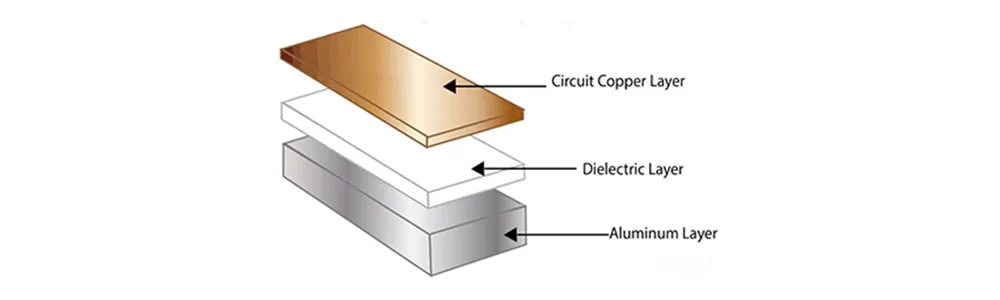
The aluminum PCB structure follows a precise four-layer configuration that maximizes thermal efficiency while maintaining electrical performance standards. Understanding this layered approach proves crucial for engineers specifying thermal management solutions.
Circuit Layer Configuration
The copper foil layer forms the primary conductive pathway, utilizing thickness ranges from 1oz to 10oz depending on current carrying requirements. This increased copper thickness compared to standard PCBs enables higher power handling capacity while contributing to overall thermal distribution.
The dielectric layer serves as the thermal interface material, maintaining electrical isolation between the copper circuitry and aluminum base. This critical component typically measures 50μm to 200μm in thickness and incorporates thermally conductive polymers that minimize thermal resistance while preserving dielectric strength.
Substrate Foundation
The aluminum base layer constitutes the thermal backbone of the assembly, manufactured from aluminum alloys optimized for heat conduction and mechanical stability. This foundation layer provides structural integrity while actively transferring heat from the circuit layer to external heat sinks or ambient environment.
An optional aluminum base membrane layer offers surface protection against mechanical damage and unwanted etching during manufacturing processes. This protective coating varies in temperature rating, with standard variants handling temperatures up to 120°C and high-temperature versions rated for 250°C operation.
Aluminum PCB
Advanced Thermal Management Engineering
The thermal performance characteristics of aluminum PCBs represent their primary engineering advantage, requiring detailed analysis for optimal implementation in high-power applications. Engineers must consider multiple thermal parameters when specifying aluminum PCB solutions for demanding thermal environments.
Dielectric Material Selection Criteria
Selecting appropriate dielectric materials demands careful evaluation of thermal conductivity ratings, dielectric strength requirements, and operating temperature ranges. Materials exhibiting thermal conductivity values of 2.0-3.0 W/mK provide optimal heat transfer performance, while thinner dielectric layers reduce overall thermal impedance across the assembly.
The dielectric material must simultaneously meet flame retardancy standards such as UL94V-0 while maintaining adequate breakdown voltage ratings for the intended application. This dual requirement often necessitates trade-offs between thermal performance and electrical safety margins that engineers must carefully balance.
Thermal Resistance Optimization
Thermal resistance analysis involves calculating the complete thermal path from semiconductor junction to ambient environment. Aluminum PCB implementations typically reduce junction-to-ambient thermal resistance by 40-60% compared to equivalent FR4 designs, enabling higher power density operation or improved reliability margins.
Critical thermal design parameters include copper thickness selection, dielectric thermal conductivity, aluminum base thickness, and thermal interface material properties. Advanced thermal modeling techniques help optimize these parameters for specific application requirements while maintaining manufacturing feasibility.
ENIG Aluminum PCB
Key Features and Performance Advantages
Aluminum PCB features deliver measurable performance improvements across multiple engineering disciplines, making them preferred solutions for thermally demanding applications. These advantages extend beyond simple heat management to encompass mechanical and electrical performance enhancements.
Thermal Expansion Management
Aluminum substrates exhibit superior dimensional stability under thermal cycling conditions compared to organic PCB materials. Thermal expansion coefficients closely matching those of mounted components reduce mechanical stress accumulation, improving solder joint reliability and overall assembly lifespan.
The dimensional change characteristics of aluminum PCBs remain within 2.5-3.0% when subjected to temperature ranges from 30°C to 150°C, providing predictable mechanical behavior for precision applications requiring tight tolerance maintenance.
Enhanced Current Carrying Capacity
Thicker copper layers standard in aluminum PCB construction enable higher current densities without excessive resistive heating. This capability proves particularly valuable in power conversion applications where conductor sizing limitations often constrain FR4 board implementations.
The improved thermal dissipation capacity allows for more aggressive current density specifications while maintaining acceptable operating temperatures, resulting in more compact and efficient power electronic designs.
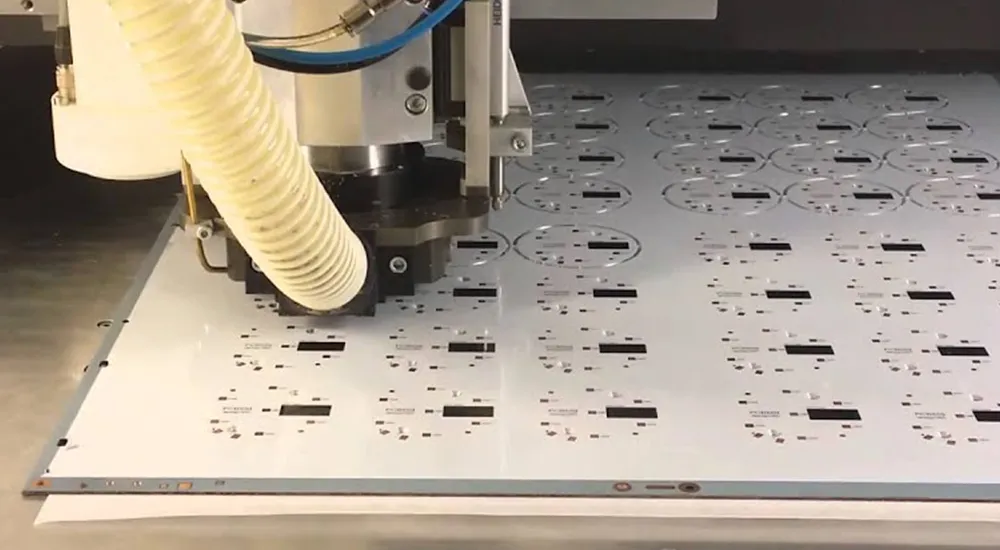
Routing Aluminum PCB
Manufacturing Considerations and Quality Control
Aluminum PCB manufacturing presents unique technical challenges that require specialized process control and quality assurance procedures. Understanding these manufacturing aspects helps engineers specify realistic design requirements and delivery expectations.
Copper Etching Process Control
The increased copper thickness common in aluminum PCBs necessitates modified etching procedures to maintain trace geometry accuracy. Copper foil thicknesses exceeding 3oz require width compensation calculations to account for lateral etching effects that could result in out-of-tolerance trace dimensions.
Etching factor control becomes critical for maintaining consistent impedance characteristics and current carrying capacity across production batches. Manufacturing partners must demonstrate capability in controlling these parameters through statistical process control methods.
Solder Mask Application Techniques
The substantial copper thickness variations inherent in aluminum PCB designs create challenges for uniform solder mask application. Surface topology differences between thick copper traces and substrate areas require specialized printing techniques or multiple coating passes to achieve adequate coverage uniformity.
High-quality solder mask materials specifically formulated for aluminum PCB applications help ensure proper adhesion and coverage while maintaining the thermal performance characteristics that justify aluminum PCB selection.
Summary and Selection Guidelines
Aluminum PCBs provide essential thermal management capabilities for high-power electronic applications where traditional FR4 materials prove inadequate. The combination of superior thermal conductivity, mechanical stability, and enhanced current carrying capacity makes aluminum PCBs the preferred choice for LED lighting systems, power electronics, automotive applications, and industrial equipment requiring reliable heat dissipation.
Engineers evaluating aluminum PCB solutions should focus on thermal conductivity requirements, operating temperature ranges, and current density specifications when comparing against traditional PCB alternatives. The initial cost premium associated with aluminum PCBs typically proves justified through improved reliability, reduced cooling requirements, and enhanced system performance.
Procurement professionals should consider the specialized manufacturing requirements and longer lead times associated with aluminum PCB production when planning project schedules and supplier selection criteria.
Why Choose Haoyue Electronics for Your Aluminum PCB Projects
Haoyue Electronics delivers comprehensive aluminum PCB manufacturing and assembly solutions backed by advanced thermal management expertise and rigorous quality control.
Our Aluminum PCB Manufacturing Strengths:
-
Precise dielectric material selection – optimized for superior thermal conductivity
-
Advanced copper etching processes – ensuring accurate trace geometry control
-
Specialized solder mask techniques – providing superior coverage uniformity
-
Statistical process control – consistent performance across all thermal-critical parameters
Our Assembly Capabilities:
-
High-temperature soldering processes – tailored for aluminum substrates
-
Comprehensive thermal testing and validation – ensuring reliable performance under demanding conditions
-
Design for manufacturing (DFM) consultation – balancing thermal efficiency and cost-effectiveness
Contact Haoyue Electronics today to leverage our aluminum PCB expertise. Our engineering team is ready to optimize your design for maximum thermal efficiency and manufacturing reliability.