
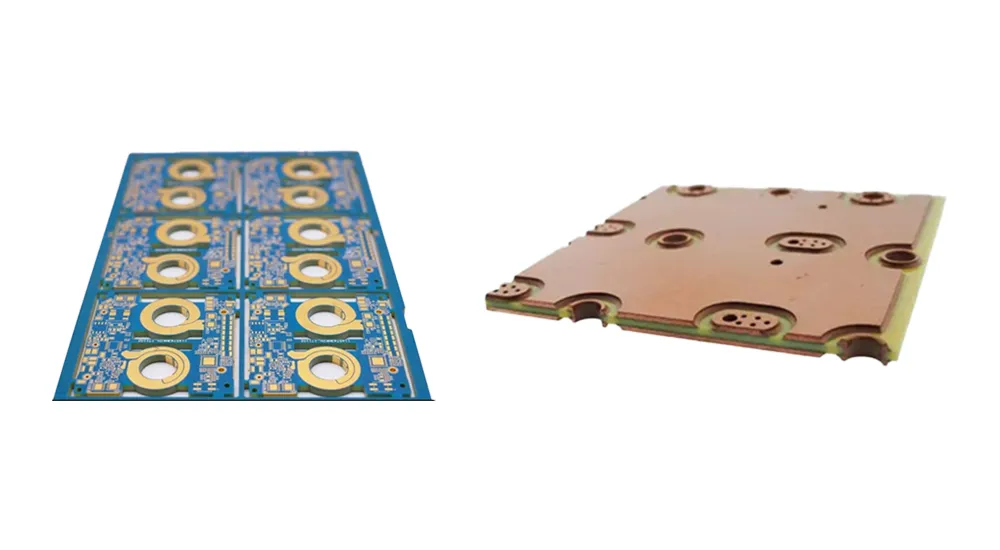
Heavy copper printed circuit boards represent a specialized segment of PCB manufacturing designed to handle high-current applications while maintaining thermal stability and mechanical integrity. As electronic systems demand greater power density and improved thermal performance, understanding the intricacies of heavy copper PCB manufacturing becomes essential for engineers and manufacturers working in power electronics, automotive systems, and industrial applications.
This comprehensive examination explores the advanced manufacturing processes, technical challenges, and engineering considerations that define heavy copper PCB production. From specialized etching techniques to material selection and quality control measures, we analyze the critical factors that ensure successful implementation of these high-performance circuit boards.
Understanding Heavy Copper PCB Specifications and Classifications
Heavy copper PCBs are distinguished by their copper weight, typically defined as copper thickness exceeding 3 ounces per square foot (105 micrometers). Standard PCBs commonly utilize copper weights between 0.5 to 2 ounces per square foot, while heavy copper applications extend from 4 ounces to extreme copper PCB configurations reaching 200 ounces per square foot.
The classification system for heavy copper PCBs encompasses several categories based on copper weight. Standard heavy copper ranges from 4 to 10 ounces per square foot, suitable for most high-current applications. Extreme heavy copper applications utilize weights from 20 to 200 ounces per square foot, primarily employed in power distribution systems, welding equipment, and high-power LED applications.
Current-carrying capacity scales directly with copper cross-sectional area, making trace width and copper thickness critical design parameters. A 4-ounce copper trace with 0.25-inch width can safely carry approximately 34 amperes, while the same width in 20-ounce copper handles over 180 amperes. This relationship between copper weight and current capacity drives material selection decisions in power electronics design.
Thermal management capabilities improve significantly with increased copper weight. The enhanced thermal mass and conductivity of heavy copper layers facilitate heat distribution across the PCB substrate, reducing hot spots and improving component reliability. This thermal advantage becomes particularly important in multilayer PCB manufacturing processes where internal heat generation requires efficient dissipation pathways.
Heavy Copper PCB Manufacturing Process: Technical Implementation
The manufacturing process for heavy copper PCBs requires specialized techniques that differ substantially from standard PCB production methods. Traditional etching and plating processes must be adapted to handle the increased material volume and achieve precise pattern definition despite challenging aspect ratios.
Substrate Preparation and Inner Layer Processing
Manufacturing begins with substrate preparation using materials capable of withstanding the increased thermal and mechanical stresses associated with heavy copper processing. FR-4 substrates with enhanced glass transition temperatures provide the necessary stability, while specialized materials like polyimide or ceramic substrates serve extreme applications.
Inner layer processing utilizes modified etching techniques designed to remove substantial copper volumes while maintaining trace definition. Alkaline etchants with extended processing times ensure complete copper removal from non-circuit areas. The etching process requires careful control of solution concentration, temperature, and spray pressure to achieve uniform results across large copper areas.
Specialized Etching and Pattern Definition
Heavy copper etching presents unique challenges related to etch factor control and sidewall quality. The etch factor, defined as the ratio of copper thickness to undercut distance, becomes critical as copper weight increases. Typical etch factors for heavy copper applications range from 2:1 to 4:1, requiring precise process control to maintain trace geometry.
Pattern definition techniques must accommodate the increased material thickness while preserving fine-pitch capabilities where required. Photoresist systems specifically formulated for thick copper applications provide adequate thickness and resolution for pattern transfer. Dry film photoresists with thickness ratings up to 75 micrometers ensure complete coverage over heavy copper features.
Advanced Plating Techniques
Electroplating processes for heavy copper PCBs require extended plating times and specialized chemistry formulations. Copper sulfate baths with optimized organic additives ensure uniform deposition across varying current densities. Plating thickness control becomes critical, particularly in through-hole applications where copper distribution affects hole integrity.
Through-hole plating in heavy copper applications demands careful attention to throwing power and bath agitation. Specialized plating racks and cathode configurations ensure uniform copper distribution throughout the hole barrel. Quality control measures include periodic thickness measurements and cross-sectional analysis to verify plating uniformity.
Lamination and Multilayer Construction
Lamination processes require modified parameters to accommodate the increased material thickness and thermal mass of heavy copper layers. Pressure profiles, cure cycles, and cooling rates must be adjusted to prevent delamination and ensure proper resin flow around copper features.
Materials and Substrate Selection for Heavy Copper Applications
Material selection for heavy copper PCBs extends beyond traditional substrate considerations to encompass thermal expansion compatibility, mechanical strength, and dielectric properties under high-current conditions. The interaction between substrate materials and heavy copper layers affects board reliability and manufacturing yields.
Substrate Material Properties
FR-4 substrates remain the most common choice for heavy copper applications, with modifications to glass transition temperature and decomposition temperature specifications. High-Tg FR-4 formulations with glass transition temperatures exceeding 170°C provide stability during the extended thermal cycles required for heavy copper processing.
Polyimide substrates offer superior thermal stability for extreme applications, with continuous operating temperatures reaching 200°C or higher. The coefficient of thermal expansion (CTE) matching between polyimide and copper provides enhanced reliability under thermal cycling conditions.
Dielectric Considerations
Dielectric constant stability under high-current conditions becomes important for impedance-controlled applications. Heavy copper traces generate significant heat, affecting local dielectric properties and impedance characteristics. Material selection must consider these thermal effects to maintain signal integrity requirements.
The selection process also involves evaluating rigid PCB manufacturing process compatibility with heavy copper requirements, ensuring that standard manufacturing equipment can accommodate the increased material thickness and processing demands.
Thermal Management and Heat Dissipation Strategies
Effective thermal management represents one of the primary advantages of heavy copper PCB technology. The increased copper mass provides enhanced heat spreading and improved thermal conductivity pathways for component cooling. Understanding and optimizing these thermal characteristics requires comprehensive analysis of heat generation, distribution, and dissipation mechanisms.
Heat Generation and Distribution
Current flow through heavy copper traces generates resistive heating proportional to the current squared and resistance values. While heavy copper traces exhibit lower resistance per unit length, the total heat generation depends on current levels and trace geometry. Thermal analysis must consider both steady-state and transient heating conditions.
Heat distribution patterns in heavy copper PCBs differ from standard designs due to the increased thermal mass and conductivity. The heavy copper layers act as heat spreaders, distributing localized heat generation across larger areas and reducing peak temperatures. This spreading effect improves component reliability and enables higher power density designs.
Thermal Interface Design
Thermal interface design becomes critical in heavy copper applications where heat dissipation requirements exceed standard cooling methods. Thermal vias connecting heavy copper layers to heat sinks or thermal planes provide efficient heat transfer pathways. Via design considerations include diameter, spacing, and fill materials to optimize thermal conductivity.
Advanced Cooling Integration
Advanced cooling strategies integrate heavy copper PCB design with external cooling systems. Heat sink mounting areas utilize heavy copper layers to improve thermal interface conductance. Liquid cooling integration points benefit from the enhanced thermal spreading provided by heavy copper construction.
The integration of thermal management techniques often involves rigid-flex PCB manufacturing process considerations when mechanical flexibility requirements coexist with thermal management needs.
Quality Control and Testing Methodologies
Quality control for heavy copper PCBs requires specialized testing methods and acceptance criteria that address the unique characteristics and requirements of high-current applications. Standard PCB testing protocols must be supplemented with heavy copper-specific evaluations to ensure performance and reliability.
Electrical Testing Parameters
Electrical testing extends beyond standard continuity and insulation resistance measurements to include high-current testing and thermal performance validation. Current-carrying capacity testing verifies trace ability to handle rated currents without excessive temperature rise. Temperature coefficient measurements ensure copper resistance stability across operating temperature ranges.
Power cycling tests simulate real-world operating conditions by applying rated currents for extended periods while monitoring temperature profiles. These tests validate thermal design calculations and identify potential reliability issues before field deployment.
Metallurgical Analysis
Metallurgical analysis techniques evaluate copper grain structure, purity, and adhesion characteristics. Cross-sectional microscopy reveals potential manufacturing defects such as voids, inclusions, or delamination issues. Energy-dispersive X-ray spectroscopy (EDS) confirms copper purity and identifies contamination sources.
Reliability Testing Protocols
Reliability testing for heavy copper PCBs incorporates thermal cycling, vibration testing, and mechanical stress analysis. Thermal cycling tests with temperature ranges exceeding standard protocols verify solder joint integrity and copper expansion compatibility. Mechanical testing evaluates board flexural strength and connector area robustness.
Long-term reliability assessment includes accelerated aging tests under high-temperature, high-current conditions. These tests project service life and identify failure modes specific to heavy copper applications.
Manufacturing quality systems must also address high-frequency PCB manufacturing requirements when heavy copper designs incorporate high-speed signal transmission alongside high-current capabilities.
Partner with Haoyue Electronics for Reliable Heavy Copper PCB Design and Manufacturing
Designing and manufacturing heavy copper PCBs requires more than just increased copper thickness—it demands a deep understanding of thermal management, plating techniques, and layer integrity across high-current applications. Haoyue Electronics brings over a decade of experience in delivering high-reliability heavy copper PCBs for industrial control systems, power electronics, automotive modules, and energy conversion equipment.
Why engineers choose Haoyue for heavy copper solutions:
-
✅ Copper Thickness up to 12 oz with consistent plating quality and edge integrity
-
✅ Advanced Multilayer Stack-ups with heavy copper inner layers for complex power distribution
-
✅ Precision Etching & Drilling for fine-feature traces even under high copper loads
-
✅ Expert Design Support to help balance conductivity, thermal dissipation, and manufacturability
-
✅ Strict Quality Assurance backed by ISO9001, ISO13485, and IATF16949 certifications
-
✅ Flexible Production Volumes, from prototypes to large-scale batch delivery