
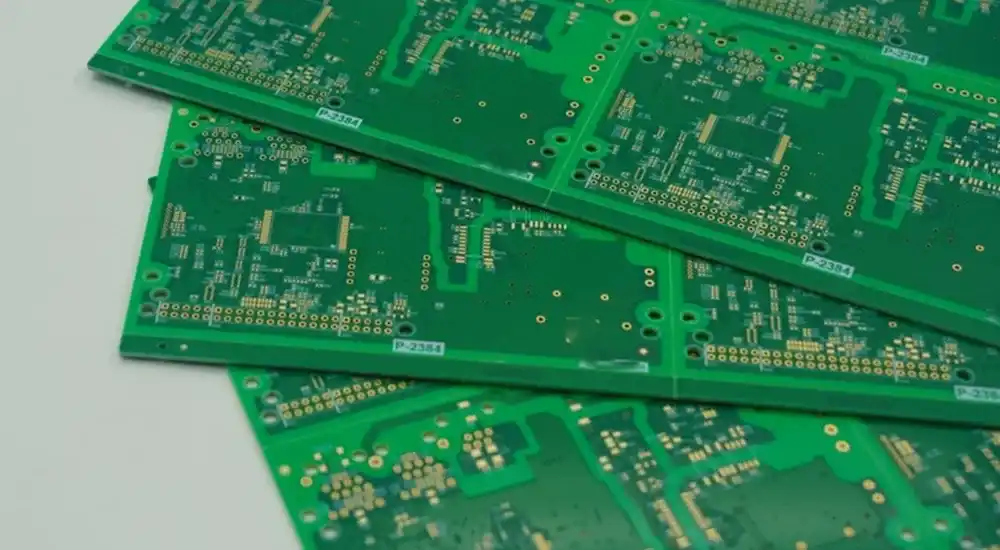
The rigid PCB manufacturing process involves multiple precise steps that transform raw materials into functional circuit boards. Understanding each phase of rigid PCB fabrication ensures optimal quality and reliability for electronic applications across industries.
Step 1: Material Selection and Sheet Cutting
Material Selection for Rigid PCB Production
The rigid PCB manufacturing process begins with strategic material selection. FR4 fiberglass-reinforced epoxy laminate serves as the standard substrate material due to its excellent electrical properties, thermal stability, and cost-effectiveness. Specialized applications may require high-frequency laminates for RF circuits, ceramic substrates for high-temperature environments, or metal core materials for LED and power electronics.
Advanced rigid PCB manufacturers evaluate operating temperature ranges, dielectric constant requirements, thermal expansion coefficients, and flame retardancy specifications during material selection. This careful consideration ensures optimal substrate performance for the intended application.
Precision Sheet Cutting Operations
Large copper-clad laminate sheets measuring 36 x 48 inches undergo precision cutting into manageable working panels, typically 18 x 24 inches, based on engineering specifications from Gerber files. Computerized cutting systems ensure dimensional accuracy while minimizing material waste.
The sheet cutting process includes edge smoothing operations to eliminate potential stress concentrators and ensure uniform handling characteristics throughout subsequent rigid PCB manufacturing phases.
Step 2: Multi-Layer Lamination Process (For Multi-Layer Rigid PCBs)
Multi-layer rigid PCB manufacturing requires sophisticated lamination processes that combine inner copper layers with prepreg materials to achieve desired layer counts and electrical characteristics. This critical step applies specifically to multi-layer rigid PCB designs where multiple copper layers must be bonded together to create complex circuit structures.
Layer Formation and Stackup Assembly
The booking and lay-up phase involves meticulous arrangement of copper foil layers and prepreg sheets according to multi-layer PCB stackup specifications. Each layer position must align perfectly to ensure proper interlayer connectivity in the finished multi-layer rigid PCB.
Professional multi-layer rigid PCB manufacturing facilities utilize specialized equipment to maintain precise layer registration throughout the lamination process, preventing misalignment that could compromise circuit functionality.
Hot Press Lamination for Multi-Layer Rigid PCBs
Hot pressing operations subject the arranged layers to controlled temperature and pressure cycles, typically reaching temperatures between 170-180°C under pressures exceeding 300 PSI. This combination activates the prepreg resin system, creating strong mechanical bonds between layers while maintaining precise thickness control in multi-layer rigid PCB construction.
Following hot pressing, controlled cooling cycles allow the laminated multi-layer structure to solidify without introducing thermal stress. Target drilling preparation marks reference points for subsequent drilling operations across all PCB layers.
Step 3: Precision Drilling and Copper Plating
Computer-Controlled Drilling Operations
Drilling operations in rigid PCB manufacturing utilize computer numerically controlled equipment to achieve positioning accuracies typically within ±0.05mm. Via holes, component mounting holes, and tooling holes are drilled according to NC drill files generated from the original PCB design data.
Modern rigid PCB manufacturing facilities employ multiple spindle drilling machines that simultaneously drill hundreds of holes, significantly improving production efficiency while maintaining consistent hole quality throughout the rigid PCB fabrication process.
Electroless and Electrolytic Copper Plating
The copper plating process creates essential electrical connections between PCB layers through drilled via holes. Electroless copper plating initially deposits a thin conductive layer on hole walls, providing the foundation for subsequent electrolytic copper buildup.
Pre-treatment operations include aggressive cleaning to remove drilling debris and oxidation, followed by conditioning treatments that promote uniform copper adhesion. The electroless copper process typically deposits 0.5-1.0 micrometers of copper, while electrolytic plating builds this to the required thickness of 20-25 micrometers for standard rigid PCB applications.
Step 4: Photolithographic Imaging and Precision Etching
High-Resolution Image Transfer
The imaging phase of rigid PCB manufacturing employs photolithographic techniques to transfer circuit patterns from design files onto copper surfaces. This critical rigid PCB fabrication step requires cleanroom conditions and precise exposure control to achieve fine line widths and spacing.
Surface preparation involves thorough cleaning and micro-etching to promote photoresist adhesion. Dry film photoresist application creates a uniform coating that responds predictably to UV exposure through precisely aligned artwork masks.
UV exposure systems utilize collimated light sources and vacuum contact printing to ensure sharp image definition and accurate feature reproduction in the rigid PCB manufacturing process.
Chemical Etching and Copper Removal
The etching process removes unwanted copper areas, leaving only the desired circuit traces and pads. Modern rigid PCB manufacturing employs conveyorized etching systems that provide uniform etchant distribution and precise process control.
Ferric chloride or alkaline ammonia etching solutions dissolve unprotected copper areas while photoresist masks protect intended circuit patterns. Etch rate control ensures uniform copper removal without undercutting, maintaining precise line widths and spacing tolerances throughout the rigid PCB production process.
Step 5: Solder Mask Application and Silkscreen Printing
Professional Solder Mask Processing
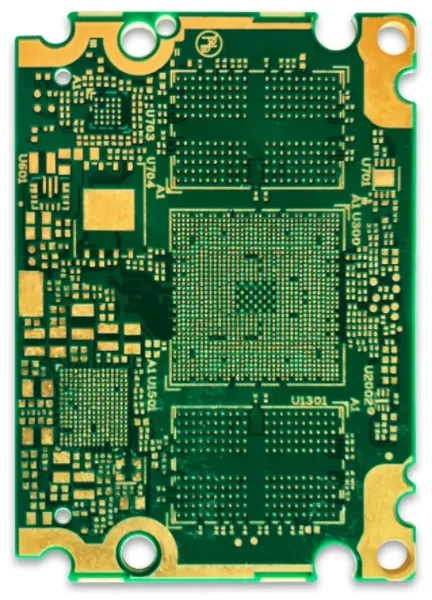
Solder mask application protects finished copper circuits from environmental contamination while providing solderable openings for component attachment. Liquid photoimageable solder masks offer superior resolution and coverage in professional rigid PCB manufacturing.
The solder mask application process begins with thorough surface cleaning and micro-etching to promote adhesion. Screen printing or curtain coating applies uniform solder mask thickness, typically 12-20 micrometers over copper traces and 20-40 micrometers in bare areas.
UV exposure through precisely registered solder mask artwork creates openings at component pads and test points. Development removes unexposed solder mask material, revealing solderable copper surfaces while protecting circuit traces.
Silkscreen Legend Printing
Silkscreen printing adds component reference designators, polarity markings, and assembly instructions that facilitate efficient PCB assembly operations. Modern rigid PCB manufacturing utilizes both screen printing and digital inkjet printing technologies to achieve clear, durable markings.
Screen printing employs specially formulated inks that cure to provide excellent adhesion and chemical resistance. Component outline printing helps assembly technicians accurately position components during the assembly phase of rigid PCB production.
Step 6: Surface Finishing and Final Inspection
Advanced Surface Finish Technologies
Surface finishing operations protect exposed copper surfaces while providing optimal solderability for component attachment. Immersion Gold (ENIG) finishing offers excellent shelf life and solderability, making it ideal for fine-pitch components and lead-free soldering processes in rigid PCB manufacturing.
Hot Air Solder Leveling (HASL) provides cost-effective surface protection with good solderability characteristics. Organic Solderability Preservative (OSP) finishing offers environmental advantages while maintaining excellent solderability for immediate assembly.
Precision Profiling and Mechanical Finishing
PCB profiling operations create final board outlines using CNC routing or punching operations. Router profiling provides excellent dimensional accuracy and smooth edge finishes in the rigid PCB manufacturing process, while punching operations offer high-speed processing for simple rectangular outlines.
Tab routing creates multiple PCBs within a single panel, connected by small tabs that facilitate handling during assembly while allowing easy separation after component installation.
Comprehensive Final Inspection and Testing
Final inspection procedures verify that completed rigid PCBs meet all dimensional, visual, and electrical specifications. Automated optical inspection systems examine solder mask coverage, silkscreen clarity, and surface finish quality with microscopic precision.
Electrical testing includes continuity verification for all intended connections and isolation testing to ensure no unintended short circuits exist. Visual inspection procedures examine edge quality, surface finish uniformity, and overall workmanship standards in the completed rigid PCB manufacturing process.
Statistical sampling plans ensure consistent quality while maintaining production efficiency throughout the rigid PCB fabrication cycle.
Conclusion
The rigid PCB manufacturing process demands precision and expertise at every production phase. From initial material selection through final inspection, each step contributes to the reliability and performance of the finished rigid PCB.
Professional rigid PCB manufacturing requires comprehensive understanding of each process step to deliver solutions that meet demanding performance requirements across diverse electronic applications. Proper execution of the rigid PCB production process ensures optimal functionality, reliability, and quality in the finished product.
At Haoyue Electronics, our advanced rigid PCB manufacturing capabilities and decades of experience ensure your projects benefit from industry-leading quality standards and precision manufacturing techniques. Whether you require standard single-layer boards or complex multi-layer rigid PCBs, our team provides the expertise necessary to transform your designs into reliable, high-performance circuit boards. Contact us today to discuss your specific rigid PCB manufacturing requirements and discover how our comprehensive production capabilities can support your next electronic innovation.
Frequently Asked Questions
1. What is the typical lead time for rigid PCB manufacturing?
The lead time for rigid PCB manufacturing depends on design complexity and order quantity. Single and double-layer PCBs usually take 5-7 days for prototypes, while multi-layer PCBs may take 10-15 days due to additional processes. Rush services are available but may increase costs.
2. How do material choices affect the rigid PCB manufacturing process?
Material selection impacts both manufacturing and performance. FR4 materials are cost-effective and compatible with standard processes. High-frequency laminates require special handling, while ceramic substrates and metal core materials need adjusted processing steps, affecting overall complexity.
3. What quality control measures are implemented during rigid PCB manufacturing?
Quality control includes material inspection, dimensional verification during drilling, copper thickness measurement, and final testing with automated optical inspection and electrical verification. Statistical controls are used to monitor parameters and prevent defects.