
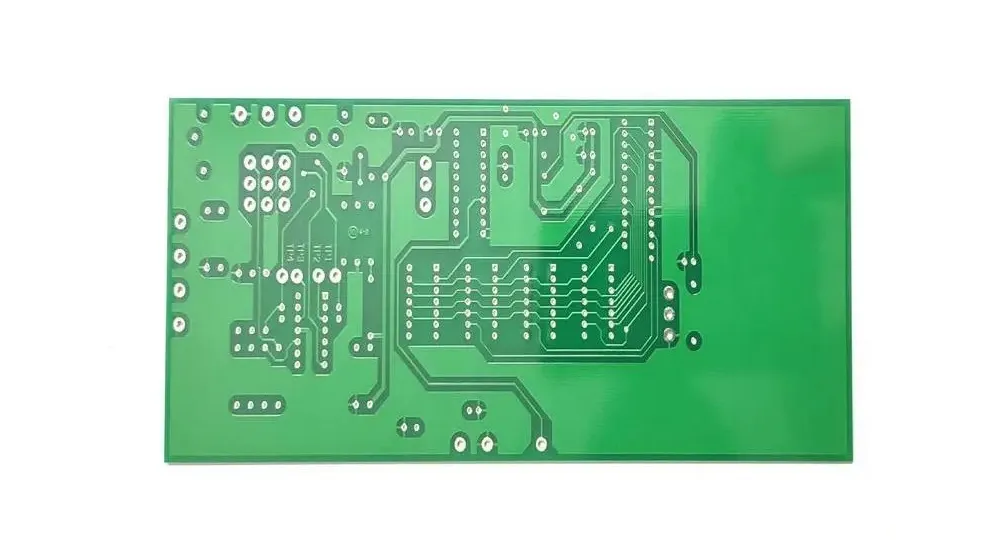
The effectiveness of single layer PCB design depends on thorough understanding of electrical constraints, thermal management, and manufacturing limitations. Modern electronics demand precise trace width calculations, optimal component placement strategies, and adherence to industry standards to ensure reliable performance across diverse applications.
Fundamental Design Methodology and Planning Framework
Schematic Analysis and Design Requirements Definition
Successful single layer PCB design begins with comprehensive schematic analysis to identify critical design constraints before layout initiation. The designer must evaluate current flow patterns, signal timing requirements, and thermal dissipation needs to establish a foundation for optimal component placement and routing strategies. This preliminary analysis determines whether single layer implementation provides adequate performance for the intended application or requires design modifications to accommodate single-sided constraints.
Power distribution analysis forms the cornerstone of single layer design planning. The absence of dedicated power planes necessitates careful current path analysis to ensure adequate copper area for power delivery while maintaining signal integrity. Designers must calculate total current requirements for each power rail and establish minimum trace widths using IPC-2221 guidelines before proceeding with component placement decisions.
Signal flow analysis identifies potential routing conflicts early in the design process. Single layer boards cannot accommodate crossing traces without external jumpers or component bridges, making signal path optimization critical for design success. Creating a preliminary routing plan during schematic review prevents costly redesign iterations and ensures feasible layout implementation.
Component Selection and Footprint Optimization
Component selection significantly impacts single layer PCB design feasibility and performance. Surface mount components provide superior electrical characteristics and enable higher component density compared to through-hole alternatives. The reduced parasitic inductance and capacitance of surface mount packages improves high-frequency performance while simplifying routing requirements through smaller footprint dimensions.
Package orientation decisions affect routing efficiency and thermal management. Components with symmetrical pin arrangements, such as SOIC and QFN packages, provide greater routing flexibility compared to packages with fixed pin functions. Strategic component orientation enables optimal trace routing while maintaining adequate spacing for manufacturing and assembly requirements.
Integrated circuit selection should prioritize packages with pin arrangements conducive to single layer routing. Devices with power and ground pins positioned on opposite sides of the package simplify power distribution routing and reduce the need for complex trace patterns. When possible, selecting components with fewer I/O requirements reduces routing complexity and improves design reliability.
Advanced Component Placement Strategies
Component placement optimization in single layer designs requires systematic analysis of electrical, thermal, and mechanical interactions. The placement process should begin with power distribution components, including voltage regulators, input/output connectors, and bulk capacitance, establishing the foundation for efficient power delivery throughout the board.
Critical signal path components require positioning that minimizes trace lengths and reduces parasitic effects. High-frequency circuits benefit from clustered component arrangements that limit interconnect lengths and reduce electromagnetic interference. Analog circuits demand separation from digital switching circuits to prevent noise coupling through shared ground paths or electromagnetic radiation.
Thermal management considerations drive component spacing requirements and copper distribution strategies. Heat-generating components should utilize maximum available copper area for thermal dissipation while maintaining adequate clearance from temperature-sensitive devices. Power semiconductors require strategic placement near board edges or areas with enhanced airflow to prevent thermal accumulation that could affect circuit performance or reliability.
The placement process must account for assembly and testing accessibility. Components requiring manual adjustment or calibration need adequate clearance for tooling access. Test points should maintain sufficient spacing for probe placement while avoiding interference with normal circuit operation. Reference designator placement must provide clear component identification without obscuring critical assembly features.

Detailed Design Implementation and Routing Techniques
Comprehensive Trace Width Calculations and Design Rules
Precise trace width determination represents the most critical aspect of single layer PCB design, requiring detailed analysis of current requirements, thermal constraints, and voltage drop limitations. The industry-standard IPC-2221 provides the fundamental relationship: I = k × (ΔT)^0.44 × (A)^0.725, where I represents current in amperes, ΔT indicates temperature rise in Celsius, A denotes cross-sectional area in square mils, and k equals 0.048 for external layers.
This formula enables accurate trace width calculations, but practical implementation requires consideration of multiple factors beyond basic current capacity. Voltage drop calculations using V = I × R × L determine whether trace resistance introduces unacceptable voltage variations. Trace resistance depends on length, cross-sectional area, and copper resistivity, typically 1.72 × 10^-8 ohm-meters at room temperature.
| Current (A) | Trace Width (mils) | Resistance (mΩ/inch) | Voltage Drop (mV/inch) | Temperature Rise (°C) |
|---|---|---|---|---|
| 0.15 | 57.0 | 15.7 | 100 | 5.7 |
| 0.5 | 78.5 | 39.3 | 101 | 25.3 |
| 1.0 | 53.1 | 31.4 | 102 | 28.6 |
| 1.5 | 59.3 | 27.9 | 103 | 30.8 |
| 2.0 | 55.0 | 25.2 | 105 | 26.0 |
Power trace design requires additional considerations beyond basic current capacity calculations. Switching currents in digital circuits create instantaneous current demands exceeding average calculations. Power traces should accommodate peak current requirements with safety margins of 25-50% above calculated values. Transient current spikes from capacitive loads or motor starting currents may require significantly wider traces than steady-state calculations indicate.
Ground trace design demands particular attention in single layer implementations. Without dedicated ground planes, ground traces must provide low-impedance return paths for all circuit currents while maintaining signal integrity. Ground trace width should match or exceed the widest power trace to ensure adequate current handling capacity. Creating ground loops through multiple return paths reduces impedance and improves electromagnetic compatibility.
Advanced Routing Strategies and Layout Optimization
Single layer routing requires systematic approaches to manage the fundamental constraint of non-crossing traces. The routing process should begin with power distribution networks, establishing wide traces for power and ground connections before proceeding with signal routing. Power routing creates the foundation for subsequent signal placement and determines overall layout efficiency.
Critical signal routing takes precedence over general-purpose I/O connections. Clock signals, reset lines, and other timing-critical nets require direct routing with minimal length and optimal impedance control. These signals should avoid proximity to switching circuits or power distribution lines that could introduce noise coupling. Implementing guard traces around sensitive signals provides electromagnetic shielding while maintaining single layer simplicity.
Component jumper strategies enable complex routing patterns while preserving single layer benefits. Zero-ohm resistors provide reliable crossing connections with minimal parasitic effects. Inductor jumpers offer additional filtering benefits for power distribution crossing points. Component jumpers should utilize standard footprints to maintain assembly compatibility and reduce inventory complexity.
Routing optimization techniques maximize layout efficiency while maintaining electrical performance. Serpentine routing enables length matching for critical signal groups while accommodating single layer constraints. Via placement, although limited in single layer designs, provides thermal management benefits and mechanical reinforcement for high-stress connections. Strategic copper pour implementation creates ground planes and thermal distribution networks.
Signal Integrity and Impedance Control Implementation
Single layer impedance control requires innovative approaches to achieve consistent transmission line characteristics without dedicated ground planes. Coplanar waveguide structures utilize adjacent ground traces to establish controlled impedance transmission lines suitable for high-frequency applications. The characteristic impedance depends on trace width, gap spacing to adjacent ground traces, and substrate dielectric properties.
For 50-ohm impedance on standard FR4 substrate with 1.6mm thickness, typical coplanar waveguide implementations require trace widths of 100-120 mils with ground gaps of 20-30 mils. These dimensions provide acceptable impedance control for frequencies up to several hundred megahertz while maintaining practical manufacturing constraints. Higher frequency applications may require specialized substrate materials with lower dielectric constants.
Differential signal implementation in single layer designs presents unique challenges requiring careful trace routing and spacing control. Differential pairs require matched trace lengths within 5 mils for optimal signal integrity. Maintaining consistent spacing between differential traces throughout the routing path preserves impedance characteristics and reduces electromagnetic interference. Typical differential impedance targets of 90-100 ohms require trace widths of 10-15 mils with 10-15 mil spacing on standard substrates.
Termination strategies for single layer high-frequency designs must account for limited routing flexibility. Series termination resistors placed near signal sources provide effective reflection control while minimizing routing complexity. Parallel termination requires careful placement to maintain impedance consistency while providing adequate ground connections. AC coupling capacitors enable ground isolation while maintaining signal integrity in mixed-signal applications.

Manufacturing Considerations and Design Validation
Design Rule Verification and Manufacturing Optimization
Modern single layer PCB manufacturing capabilities define design rule constraints that directly impact layout feasibility and production costs. Minimum trace width specifications typically range from 4-6 mils for advanced processes, though 8-10 mil minimums provide better yield rates and cost optimization. Trace spacing requirements generally match minimum trace width specifications, with increased spacing necessary for high-voltage applications exceeding 50 volts.
Via specifications require careful consideration in single layer applications. Through-hole vias compromise single-sided advantages but may provide necessary thermal or mechanical benefits. Minimum via drill sizes of 8 mils enable reliable manufacturing, though 12-20 mil diameters improve drilling accuracy and reduce costs. Via pad sizes should exceed drill diameters by at least 8 mils to accommodate manufacturing tolerances and ensure reliable plating adhesion.
Solder mask design rules affect component placement and trace routing decisions. Standard solder mask registration tolerances of ±2 mils require adequate clearance between exposed copper features. Solder mask bridges between fine-pitch component pads need minimum widths of 4 mils for reliable production. Component courtyard definitions should include solder mask clearances to prevent assembly conflicts.
Manufacturing panelization strategies optimize production efficiency and reduce unit costs. Panel utilization efficiency improves with rectangular board shapes and standard panel dimensions. Breakaway tab design requires adequate copper connections while enabling clean separation without board damage. Fiducial marker placement enables automated assembly alignment and improves placement accuracy for fine-pitch components.
Quality Assurance and Testing Protocols
Comprehensive design validation ensures single layer PCB reliability and performance before production commitment. Design rule checking software identifies manufacturing violations and electrical connectivity errors early in the design process. Electrical rule checking verifies power distribution adequacy and identifies potential signal integrity issues through automated analysis algorithms.
Thermal simulation validates component placement decisions and identifies potential hot spots requiring design modification. Finite element analysis predicts temperature distribution patterns under various operating conditions. Thermal validation should include worst-case scenarios with maximum ambient temperatures and component power dissipation to ensure reliable operation across specified environmental ranges.
Signal integrity simulation becomes increasingly important as single layer designs target higher frequency applications. Time domain reflectometry simulation identifies impedance discontinuities and predicts signal quality degradation. Crosstalk analysis evaluates electromagnetic coupling between adjacent traces and validates spacing requirements for sensitive analog circuits.
Electromagnetic compatibility analysis ensures regulatory compliance and identifies potential interference sources. Current distribution modeling predicts electromagnetic field patterns and evaluates shielding effectiveness. Ground system analysis validates return path adequacy and identifies potential ground loop formation that could compromise circuit performance.
Applications and Future Technology Trends
Single layer PCB design finds primary application in cost-sensitive consumer electronics, industrial control systems, and automotive auxiliary functions where simplicity and manufacturing efficiency take precedence over complex functionality. LED lighting controllers, basic sensor interfaces, and power distribution circuits represent typical applications leveraging single-layer advantages while maintaining adequate performance for their intended functions.
Emerging technologies continue expanding single layer capabilities through advanced materials and manufacturing processes. Flexible substrate implementations enable conformal designs impossible with rigid boards while maintaining single-layer simplicity. Embedded passive component technologies reduce discrete component requirements and simplify routing complexity for higher-performance applications.
Partner with Haoyue Electronics for Expert Single Layer PCB Solutions
At Haoyue Electronics, we understand that successful single layer PCB design requires the perfect balance of engineering expertise, manufacturing precision, and cost optimization. Our comprehensive PCB manufacturing and assembly services are specifically designed to support projects ranging from simple prototypes to high-volume production runs.
Our engineering team provides design consultation services to optimize your single layer layouts for manufacturability and performance. We offer rapid prototyping capabilities with typical turnaround times of 24-48 hours for single layer boards, enabling fast design iteration and validation. Our assembly services include component sourcing, automated placement, and comprehensive testing to ensure your products meet the highest quality standards.
Whether you’re developing cost-sensitive consumer products or industrial control systems requiring reliable performance, Haoyue Electronics delivers the technical expertise and manufacturing capabilities necessary for successful single layer PCB implementation. Contact our engineering team today to discuss how our specialized single layer PCB solutions can accelerate your product development and optimize your manufacturing costs.
FAQ
1. What are the main advantages of single layer PCBs?
Single layer PCBs offer low manufacturing cost, fast production turnaround, and simplified design—making them ideal for cost-sensitive applications such as LED lighting, consumer electronics, and basic control systems. They are also easier to inspect and repair compared to multilayer boards.
2. When should I avoid using a single layer PCB?
You should avoid single layer PCBs when your design requires high component density, complex routing (especially with crossing signal paths), or multiple power domains. Applications with high-speed signals, analog-digital separation needs, or thermal management challenges may require double-sided or multilayer PCBs.
3. How do I calculate the appropriate trace width for single layer PCBs?
Trace width should be calculated based on current capacity, voltage drop, and thermal rise. IPC-2221 provides a standard formula:
I = k × (ΔT)0.44 × (A)0.725,
where I is current, ΔT is allowable temperature rise, and A is the cross-sectional area. Always include a 25–50% safety margin, especially for power traces and transient loads.
4. How can I route complex circuits on a single layer without trace crossover?
To route complex circuits on a single layer, use smart component placement strategies, minimal pin-count devices, and jumper components like zero-ohm resistors or inductors. Pre-routing power and ground paths and using serpentine traces or coplanar waveguide structures can also help avoid overlaps.
5. Can single layer PCBs support high-frequency or RF signals?
Yes, but with limitations. Single layer PCBs can support high-frequency signals using controlled impedance techniques such as coplanar waveguide routing. However, the absence of a solid ground plane makes signal integrity and EMC control more challenging. Specialized materials and precise layout practices are required for such applications.