
Understanding Rigid-Flex PCB Material Components
Critical Material Selection Factors
The material selection process for rigid-flex PCBs requires comprehensive evaluation of multiple performance criteria. Reliability requirements dictate the minimum acceptable material specifications, particularly for applications in demanding environments where failure consequences are severe. The expected operational lifespan directly influences material choice, as applications requiring decades of service demand premium materials with proven long-term stability.
Manufacturing methodology compatibility represents another crucial consideration, as certain materials may require specialized processing equipment or techniques that impact production costs and lead times. Budget constraints often necessitate careful balance between material performance and cost optimization, requiring engineers to identify the most cost-effective solutions that meet minimum performance requirements.
Core Material Architecture
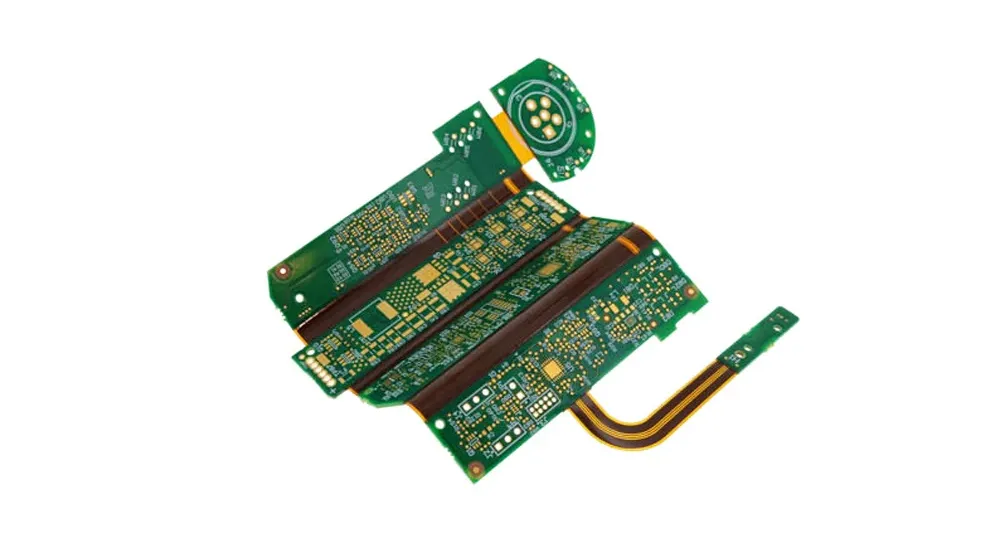
Rigid-flex PCB materials form a complex multilayer structure that combines the best attributes of both rigid and flexible circuit technologies. The fundamental architecture consists of alternating rigid and flexible sections, each requiring specific material properties to function effectively within the overall assembly.
The rigid sections typically utilize woven fiberglass substrates thoroughly impregnated with epoxy resin, providing mechanical stability and excellent electrical properties for component mounting areas. However, standard epoxy-impregnated fiberglass may prove inadequate for applications subjected to frequent vibrations, shocks, and constant movement, necessitating alternative substrate materials for demanding environments.
Flexible sections employ polyimide-based substrates that offer exceptional flexibility while maintaining electrical integrity through repeated bending cycles. The transition zones between rigid and flexible areas represent the most critical design regions, requiring specialized material considerations to prevent stress concentration and ensure long-term reliability.
Material Interface Considerations
The success of rigid-flex PCB performance heavily depends on the quality of material interfaces between different substrate types. Adhesive systems must provide strong mechanical bonding while accommodating the differential thermal expansion characteristics of dissimilar materials. Modern rigid-flex constructions often utilize adhesiveless polyimide films to eliminate potential delamination points and improve overall reliability.
Copper foil adhesion represents another critical interface consideration, particularly in flexible regions where mechanical stress concentrates during bending operations. The selection of copper foil type and thickness directly affects both electrical performance and mechanical durability of the flexible circuits.
Substrate Materials and Their Performance Characteristics
Polyimide Substrate Selection
Polyimide materials serve as the foundation for flexible circuit sections, with material selection significantly impacting both electrical and mechanical performance. Polyimide substrates are largely preferred over epoxy resins due to their versatility, toughness, and superior resistance to constant movements and vibrations. The material demonstrates impeccable heat resistance capabilities, making it ideal for applications in environments with elevated and fluctuating temperatures.
The most commonly utilized polyimide substrates include standard polyimide, thermoplastic polyimide, and liquid crystal polymer variants, each offering distinct advantages for specific applications. Standard polyimide substrates provide excellent thermal stability and chemical resistance, making them suitable for harsh environmental applications including defense, military, and power generation systems.
| Material Type | Dielectric Constant (1 GHz) | Dissipation Factor | Tensile Strength (MPa) | Operating Temperature Range |
|---|---|---|---|---|
| Standard Polyimide | 3.4-3.8 | 0.002-0.005 | 165-310 | -55°C to +500°C |
| Thermoplastic Polyimide | 3.1-3.3 | 0.001-0.003 | 200-280 | -65°C to +180°C |
| Liquid Crystal Polymer | 2.9-3.1 | 0.0015-0.0025 | 185-250 | -55°C to +200°C |
Alternative Substrate Materials
Polyester substrates, commonly available in thickness ranges from 25 to 125 microns, represent another viable option for specific rigid-flex PCB materials. This substrate material excels in applications requiring excellent flexibility and superior electrical properties. Polyester exhibits outstanding chemical and moisture resistance, enabling reliable operation in aggressive industrial environments where chemical exposure represents a significant concern.
The selection process for rigid-flex PCB materials requires a comprehensive analysis of dimensional stability characteristics, thermal resistance properties, electrical performance parameters, flexibility requirements, and chemical resistance capabilities. Each application environment demands careful evaluation of these factors to ensure optimal material selection.
Rigid Section Substrate Options
Rigid sections of rigid-flex PCBs typically utilize modified FR-4 materials optimized for compatibility with flexible sections. High-performance substrates such as polyimide-glass composites provide superior thermal performance and dimensional stability compared to standard FR-4 materials.
Low-loss dielectric materials become essential for high-frequency applications, where signal integrity requirements demand materials with consistent dielectric properties and minimal loss tangent. These specialized substrates often incorporate modified resin systems and optimized glass weave patterns to minimize signal distortion.
The thermal coefficient of expansion matching between rigid and flexible sections minimizes stress concentration at transition zones. Materials with similar CTE values reduce mechanical stress during thermal cycling, improving overall reliability and extending the operational lifetime of rigid-flex PCB materials.
Copper Foil Selection and Electrical Performance
Copper Foil Types and Manufacturing Processes
Copper foil selection significantly influences both electrical performance and mechanical reliability of rigid-flex PCBs. Copper represents the most commonly used and readily available conductor material for rigid-flex circuit board assembly, preferred for its exceptional workability and superior electrical characteristics.
For circuitry applications, two primary forms of copper foils are typically employed: electrodeposited copper and rolled copper foil. Both foil forms are available in various thicknesses and weights, each suited to specific application requirements. Electrodeposited copper foils provide excellent electrical conductivity and surface smoothness, making them ideal for high-frequency applications where signal integrity remains paramount. These foils typically exhibit lower surface roughness, reducing transmission line losses and minimizing signal distortion in high-speed digital circuits.
Rolled annealed copper foils demonstrate superior mechanical properties, particularly important for flexible sections subjected to repeated bending stress. The grain structure of rolled copper provides enhanced fatigue resistance and crack propagation resistance compared to electrodeposited copper foils, making them essential for applications requiring frequent flexing operations.
Both copper foil types undergo specialized surface treatments before assembly integration. Typically, a thin zinc layer is applied to enhance foil longevity and prevent degradation. Additionally, chemical treatments are employed to reduce bond degradation, increase adhesion characteristics, augment bond strength, and provide oxidation protection. These surface preparation steps prove critical for achieving reliable long-term performance in demanding applications.
Copper Thickness Optimization
Copper thickness selection requires balancing electrical performance requirements with mechanical flexibility considerations. Thicker copper foils provide lower resistance and improved current-carrying capacity but reduce flexibility and increase bending stress in flexible sections.
Standard copper thicknesses for rigid-flex applications range from 12 μm (0.5 oz) to 70 μm (2 oz), with selection based on specific electrical and mechanical requirements. High-current applications may require thicker copper in rigid sections while maintaining thinner copper in flexible areas to preserve bendability.
Advanced copper foil treatments, including surface roughening and adhesion promotion layers, enhance copper-to-substrate adhesion while maintaining electrical performance. These treatments become particularly important in high-reliability applications where copper adhesion failure could result in circuit malfunction.
Signal Integrity Considerations
Copper foil surface characteristics directly impact signal integrity in high-frequency applications. Smooth copper surfaces minimize transmission line losses and reduce signal distortion, while roughened surfaces may introduce unwanted impedance variations and increase attenuation.
Adhesive Systems and Bonding Technologies
Critical Role of Adhesives in Rigid-Flex Performance
Adhesives play a fundamental role in extending the service life of rigid-flex boards by creating secure connections between substrate and conductor materials. The selection of appropriate adhesive types and determination of required thickness for bonding substrates and conductors represents one of the most crucial aspects in rigid-flex circuit board manufacturing. These materials must accommodate the differential thermal expansion characteristics of dissimilar materials while maintaining strong mechanical bonds throughout the operational lifetime.
Modern rigid-flex constructions increasingly utilize specialized adhesive systems designed to address the unique challenges of mixed-material assemblies. The adhesive must provide reliable bonding while accommodating mechanical stress, thermal cycling, and chemical exposure throughout the product lifecycle.
Polyimide Adhesive Systems
Polyimide adhesives are extensively chosen for demanding applications due to their exceptional temperature resistance capabilities, withstanding temperatures up to 500°C. This extreme heat resistance makes polyimide adhesives particularly suitable for defense, military, and power generation applications where thermal performance represents a critical requirement. These adhesives demonstrate predominantly superior performance in multi-layer circuit construction due to their low coefficient of thermal expansion, which minimizes stress concentration during thermal cycling operations.
The superior thermal stability of polyimide adhesives enables their use in applications where conventional adhesive systems would fail, providing reliable bonding performance across wide temperature ranges. Their chemical resistance characteristics also contribute to long-term reliability in harsh environmental conditions.
Alternative Adhesive Technologies
Polyester adhesives represent a cost-effective solution for simpler rigid-flex PCB applications, though they exhibit relatively low bond strength characteristics and limited resistance to elevated or fluctuating temperatures. Contemporary rigid-flex manufacturers increasingly utilize modified polyester adhesives that incorporate advanced formulations to improve versatility and heat resistance properties, making them suitable for more complex board assemblies.
Acrylic adhesives offer several superior characteristics including excellent thermal stability, outstanding chemical and corrosion resistance, and ease of application. These materials provide cost advantages compared to specialty adhesives while delivering reliable performance for many standard applications. Their ready availability and straightforward processing requirements make them attractive for high-volume manufacturing operations.
Epoxy adhesive systems represent the most commonly utilized adhesive type for rigid-flex manufacturing applications. These materials can withstand elevated and fluctuating temperatures while providing excellent resistance to solvents and other chemical exposures. Epoxies demonstrate exceptional flexibility and possess superior bond stability characteristics. Modern manufacturers enhance epoxy flexibility by incorporating controlled amounts of polyester additives, optimizing the balance between mechanical properties and processing characteristics.
Coverlay and Protective Materials
Coverlay Material Selection
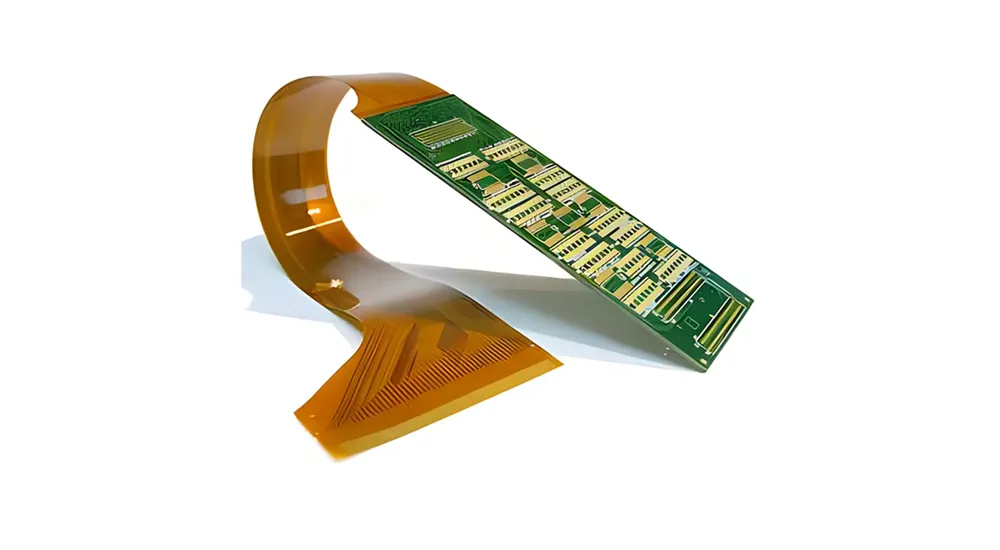
Coverlay materials provide essential protection for flexible circuit conductors while maintaining circuit flexibility and reliability. The selection of appropriate coverlay materials directly impacts both mechanical durability and electrical performance of flexible sections.
Polyimide coverlays represent the most common protective solution, offering excellent thermal stability and chemical resistance. These materials provide reliable protection against environmental contamination while maintaining flexibility through repeated bending cycles. Adhesive-backed polyimide coverlays utilize specialized acrylic or epoxy adhesive systems optimized for polyimide substrate bonding.
Adhesiveless coverlay systems eliminate potential outgassing and contamination sources while providing superior dimensional stability. These systems utilize specialized polyimide films with integral bonding layers, reducing overall construction thickness and improving flexibility.
Soldermask and Surface Finish Compatibility
Rigid sections require compatible soldermask materials that provide reliable adhesion to both rigid substrates and copper conductors. Photoimageable soldermasks offer precise feature definition and excellent electrical insulation properties, essential for high-density circuit applications.
Surface finish selection impacts both solderability and long-term reliability of rigid-flex assemblies. Hot air solder leveling (HASL), electroless nickel immersion gold (ENIG), and organic solderability preservative (OSP) finishes each offer distinct advantages depending on assembly requirements and environmental conditions.
Protective Coating Systems and Surface Treatments
Comprehensive Surface Protection Strategies
The surface protection of rigid-flex PCBs requires comprehensive coating systems that provide resistance against chemicals, oils, hydrocarbon solutions, dust, and other environmental contaminations. The protective coating selection process demands careful analysis of the materials used in the assembly, compatibility of PCB components with the coating material, and most importantly, the specific application environmental requirements.
Modern rigid-flex assemblies utilize multiple protective coating approaches, each designed to address specific environmental challenges while maintaining the inherent flexibility and electrical performance of the circuit system. The coating system must accommodate the mechanical stress concentration that occurs during flexing operations while providing reliable environmental barrier properties.
Cover Lay Protection Systems
Cover lay systems represent a primary protective approach where flexible films such as polyester or polyimide are combined with suitable adhesive systems to create comprehensive protection for the circuit assembly. Cover lay systems fulfill three major functions in rigid-flex PCB assemblies: providing comprehensive protection to the entire assembly, enabling access to specific circuitry areas such as circuit pads for further processing operations, and augmenting the overall reliability and resilience of the circuitry.
The selection of cover lay materials requires careful consideration of the mechanical properties needed to accommodate repeated flexing while maintaining adhesive integrity. Polyimide-based cover lay systems offer superior thermal resistance and mechanical durability, making them suitable for demanding applications. Polyester cover lay systems provide cost-effective protection for applications with less stringent environmental requirements.
Liquid Coating Applications
Cover coat systems utilize an alternative approach where thin coatings of liquid acrylated epoxy and acrylated polyurethane are applied directly onto the circuitry surface. The liquid coating application employs various methods including screen printing, spray coating, and other precision application techniques. Following application, the coating undergoes thermal curing to achieve final protective properties.
Liquid coating systems offer advantages in applications requiring precise coating thickness control and complex geometry coverage. These systems provide excellent conformability to circuit features while maintaining processing flexibility for high-volume manufacturing operations.
Advanced Protective Technologies
Specialized protective systems including conformal coatings provide enhanced environmental protection against moisture, chemicals, and mechanical damage while maintaining electrical insulation properties. Parylene coatings and fluoropolymer films offer superior barrier properties for extreme environmental applications, providing molecular-level protection while maintaining the inherent flexibility of the circuit assembly.
Additional optional materials such as anti-tarnishing coatings and backing substrates may be incorporated to augment operational excellence and reliability based on specific customer requirements and application demands. These specialized materials enable rigid-flex PCBs to function reliably in the most challenging environmental conditions.
Optimize Rigid-Flex PCB Performance with Haoyue Electronics
At Haoyue Electronics, we believe that selecting the right materials is crucial to the success of any rigid-flex PCB project. With decades of experience and expertise in advanced material science, our engineering team ensures the optimal design and manufacturing of your rigid-flex PCBs. We specialize in key materials, including polyimide substrates, adhesive systems, copper foils, and protective coatings.
From precise material selection and advanced multilayer construction to rigorous testing, we ensure that your rigid-flex PCBs meet the highest performance standards. Whether you’re developing prototypes or scaling for high-volume production, our technical expertise and manufacturing excellence will help bring your innovative designs to life while maximizing cost-effectiveness and reliability.
Contact us today to discuss your specific rigid-flex PCB needs and learn how we can help optimize your project’s performance and durability.