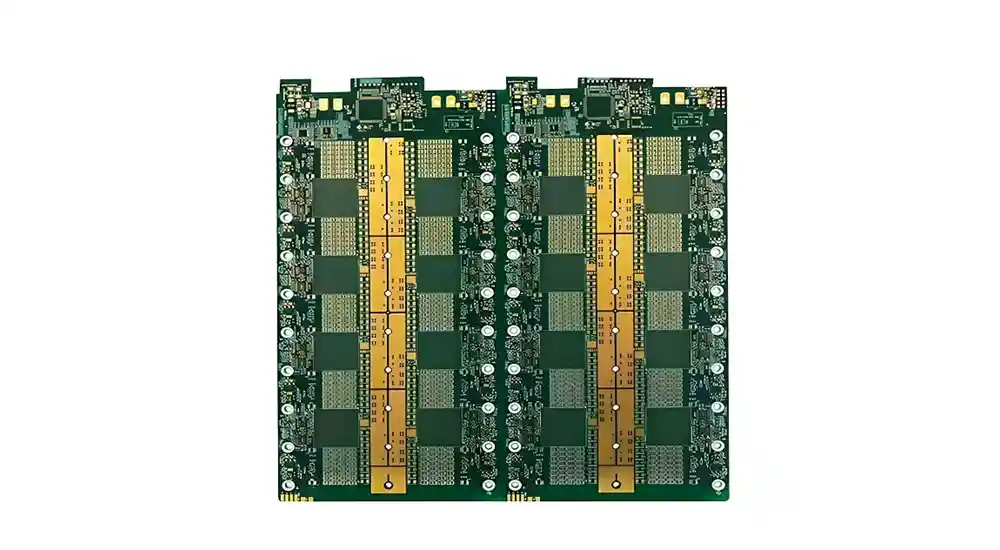
This comprehensive guide explores the intricate manufacturing process that transforms raw materials into the complex interconnected circuits powering today’s advanced electronic systems.
Understanding Multilayer PCB Architecture and Design Fundamentals
Layer Stackup Configuration
Multilayer PCBs consist of alternating layers of conductive copper and insulating substrate materials, typically ranging from four to twenty layers or more in specialized applications. The layer stackup design forms the foundation of the entire manufacturing process, determining electrical performance, signal integrity, and thermal management characteristics.
The standard multilayer configuration includes signal layers, power planes, and ground planes strategically positioned to minimize electromagnetic interference (EMI) and optimize signal transmission. Advanced designs incorporate controlled impedance routing, differential pair arrangements, and specialized layer combinations for high-speed digital applications.
Material Selection and Specifications
Substrate materials play a critical role in multilayer PCB performance and manufacturability. The most commonly used materials include:
| Material Type | Dielectric Constant | Thermal Coefficient | Primary Applications |
|---|---|---|---|
| FR-4 Standard | 4.3–4.7 | 15–17 ppm/°C | General purpose electronics |
| High-Tg FR-4 | 4.2–4.6 | 12–16 ppm/°C | Automotive, industrial |
| Polyimide | 3.4–3.6 | 12–20 ppm/°C | Flexible, high-temperature |
| Rogers Materials | 2.2–10.2 | 16–24 ppm/°C | RF/microwave applications |
Core Manufacturing Process Steps
Substrate Preparation and Inner Layer Processing
The multilayer PCB manufacturing process begins with meticulous substrate preparation. High-quality copper-clad laminates undergo precision cutting to exact dimensional specifications, followed by thorough cleaning to eliminate contaminants that could compromise adhesion or electrical performance.
Inner layer processing involves photolithographic patterning using advanced resist materials and exposure systems. The copper etching process removes unwanted material while preserving the designed circuit patterns with tolerances typically maintained within ±0.1mm for standard applications and ±0.05mm for high-density interconnect (HDI) designs.
Prepreg Preparation and Layer Stacking
Prepreg (pre-impregnated) materials serve as the bonding agent between individual PCB layers. These glass fiber fabrics impregnated with partially cured epoxy resin require precise handling and storage under controlled environmental conditions to maintain their adhesive properties and flow characteristics.
The layer stacking process demands exceptional precision, with each layer positioned according to the predetermined stackup sequence. Advanced manufacturing facilities employ automated stacking systems with vision guidance to ensure perfect alignment and eliminate potential registration errors that could compromise via connections or signal integrity.
Lamination Process and Press Cycle Control
The lamination process transforms the individual layers into a unified multilayer structure through controlled application of heat, pressure, and time. Modern lamination presses operate under computer-controlled cycles that precisely manage temperature ramping, pressure application, and cooling phases.
Critical parameters include:
- Temperature profiles ranging from 170°C to 200°C depending on material specifications
- Pressure application of 200–400 PSI maintained throughout the cure cycle
- Vacuum application to eliminate air entrapment and ensure void-free lamination
- Controlled cooling rates to minimize thermal stress and warpage
Precision Drilling and Via Formation
Post-lamination drilling creates the interconnection pathways between layers through precisely positioned vias. Advanced CNC drilling systems equipped with high-speed spindles and computer vision systems achieve hole positioning accuracy within ±0.05mm while maintaining consistent hole quality across the entire panel.
Drill bit selection and cutting parameters require optimization based on layer count, material composition, and hole diameter requirements. Typical drilling speeds range from 100,000 to 150,000 RPM for standard through-holes, with specialized micro-vias requiring even higher precision equipment.
Electroplating and Metallization
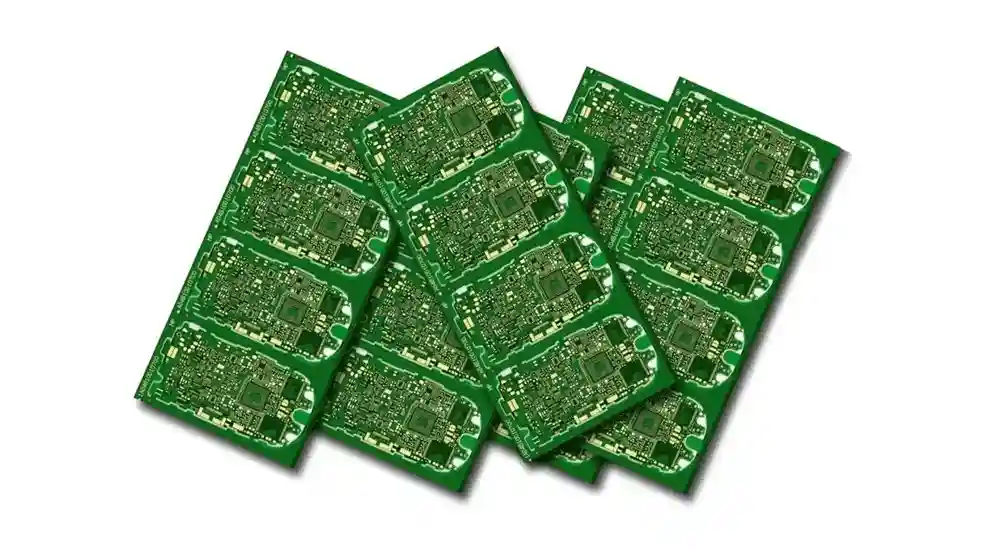
The electroplating process deposits copper within the drilled holes to establish electrical connectivity between layers. This critical step involves multiple stages including hole cleaning, catalyst application, electroless copper deposition, and electrolytic copper plating.
Process control parameters include:
- Bath temperature maintenance within ±2°C
- Current density optimization for uniform copper distribution
- Plating thickness control to achieve specified via resistance values
- Chemical analysis and bath maintenance to ensure consistent results
Advanced Manufacturing Technologies and Quality Control
Surface Finishing and Final Processing
Surface finishing protects exposed copper surfaces while providing solderable contact points for component attachment. Common finishing options include Hot Air Solder Leveling (HASL), Electroless Nickel Immersion Gold (ENIG), and Organic Solderability Preservative (OSP), each offering distinct advantages for specific applications.
Solder mask application provides electrical insulation and component placement guidance through precision screen printing or photoimaging processes. The curing process creates a durable protective layer that withstands subsequent assembly operations and environmental stresses.
Inspection and Testing Protocols
Comprehensive quality control measures ensure every multilayer PCB meets specified requirements before shipment. Automated optical inspection (AOI) systems examine surface features, dimensional accuracy, and visual defects using high-resolution cameras and advanced image processing algorithms.
Electrical testing verifies continuity, insulation resistance, and impedance characteristics through flying probe or bed-of-nails test fixtures. Advanced facilities also perform thermal cycling, vibration testing, and accelerated aging studies to validate long-term reliability performance.
Design Considerations for Optimal Manufacturing
Signal Integrity and EMI Management
Multilayer PCB design must address signal integrity challenges inherent in high-speed digital circuits. Controlled impedance routing, proper ground plane placement, and strategic via placement minimize signal degradation and electromagnetic interference. Advanced simulation tools help optimize trace geometry, layer assignments, and component placement before manufacturing begins.
Thermal Management Integration
Effective thermal management becomes increasingly critical as component densities increase and power levels rise. Multilayer designs incorporate thermal vias, copper-filled regions, and specialized materials to conduct heat away from critical components. Thermal simulation during the design phase ensures adequate heat dissipation under operational conditions.
Industry Applications and Manufacturing Scalability
Multilayer PCB technology enables advanced applications across diverse industries. Aerospace systems utilize multilayer boards for avionics, navigation, and communication equipment where reliability and performance are paramount. Automotive electronics increasingly depend on multilayer designs for advanced driver assistance systems, infotainment platforms, and electric vehicle power management.
Consumer electronics benefit from multilayer PCB miniaturization capabilities, enabling smartphone, tablet, and wearable device functionality within extremely compact form factors. Medical devices leverage multilayer technology for diagnostic equipment, implantable devices, and monitoring systems requiring exceptional reliability and biocompatibility.
Future Developments in Multilayer PCB Manufacturing
Emerging technologies continue advancing multilayer PCB capabilities and manufacturing efficiency. Embedded component integration allows passive components to be incorporated within PCB layers, further reducing assembly complexity and improving electrical performance. Advanced materials development focuses on lower-loss dielectrics, improved thermal conductivity, and enhanced reliability under extreme conditions.
Manufacturing automation continues evolving toward fully integrated production lines with real-time process monitoring, predictive maintenance capabilities, and adaptive quality control systems. These advances enable higher throughput, improved consistency, and reduced manufacturing costs while maintaining the precision required for next-generation electronic systems.
Partner with Haoyue Electronics for Advanced Multilayer PCB Solutions
At Haoyue Electronics, we combine decades of multilayer PCB manufacturing expertise with state-of-the-art production capabilities to deliver exceptional results for demanding applications. Our ISO-certified facility features advanced lamination systems, precision drilling equipment, and comprehensive testing capabilities that ensure every product meets the highest quality standards.
Whether you require prototype development, medium-volume production, or full-scale manufacturing, our experienced engineering team works closely with customers to optimize designs for manufacturability while maintaining performance requirements. Contact Haoyue Electronics today to discuss your multilayer PCB requirements and discover how our advanced manufacturing capabilities can accelerate your product development timeline while ensuring superior quality and reliability.