Introduction to High-Performance Computing (HPC) PCB
High-Performance Computing PCBs (HPC PCBs) are at the heart of modern AI servers, GPU clusters, and high-speed networking systems. These boards must support massive data throughput, complex signal transmission, and high-density power distribution while maintaining signal integrity across increasingly compact form factors.
By 2025, HDI PCB demand for server applications is projected to grow significantly, reflecting the critical role of multi-layer HDI PCBs in enabling high-performance computing workloads. Key challenges in HPC PCB design include:
- Advanced stack-up planning to optimize signal and power layers.
- High-TG materials to withstand thermal stress in dense server environments.
- Sophisticated via structures (via-in-pad, laser microvias) for precise interconnections and minimal signal loss.
Together, these design elements ensure reliable operation under the extreme electrical and thermal conditions of AI, machine learning, and high-speed computing systems.
This article will explore HPC PCB technologies, including multi-layer HDI designs, material selection, manufacturing considerations, and application examples, providing engineers and designers a comprehensive guide to meet the demands of next-generation computing platforms.
Critical Design Considerations for HPC PCB Systems
Designing High-Performance Computing (HPC) PCBs involves multiple interdependent challenges that directly affect system performance and reliability. Among these, signal integrity, power integrity, thermal management, and stackup architecture are the most critical.
Signal Integrity (SI)
Signal integrity forms the foundation of HPC PCB design. High-speed traces must be carefully routed as differential pairs with controlled impedance to minimize reflections. Crosstalk between adjacent signals must be managed through careful layer assignment and trace spacing. Proper signal integrity planning ensures reliable data transmission, even in dense multi-layer HDI boards used in AI servers and GPU clusters.
Power Integrity (PI)
HPC systems typically operate with multiple voltage domains and high current densities, making power integrity a crucial factor. Decoupling capacitors need to be strategically placed, power planes must be optimized, and voltage regulation modules carefully positioned. These measures reduce supply noise and maintain stable operation under peak computational loads, ensuring the board supports demanding workloads without performance degradation.
Thermal Management
With increasing processing density, heat dissipation is a growing concern. HDI PCBs incorporate thermal vias and heavy copper layers to extract heat from power-hungry AI chips. Effective thermal design prevents thermal throttling and guarantees consistent performance during long, intensive operations such as AI model training or large-scale simulations.
Stackup Architecture
The PCB stackup must balance routing complexity, manufacturability, and electrical performance. High-layer HDI designs are often required to accommodate dense signal routing while maintaining signal integrity. Proper stackup planning ensures high-speed signals remain stable, and the board can handle the electrical and thermal stresses of modern HPC environments.
Multi-Layer HDI PCB Technologies for High-Density Applications
HDI technology forms the backbone of modern HPC PCB design, enabling system miniaturization without compromising performance. By using laser-drilled microvias with diameters typically ≤150μm, HDI PCBs achieve precise inter-layer connections in compact spaces, surpassing the limitations of traditional mechanical drilling.
Microvias and Blind/Buried Vias
The use of microvias and blind/buried via structures significantly increases routing density while reducing overall PCB footprint. These techniques support the complex interconnections required for modern GPU interfaces, high-speed memory channels, and multi-lane serial communication protocols, all essential for AI and machine learning applications.
Sequential Lamination
Sequential lamination allows multiple microvia layers within a single stackup, further enhancing routing capabilities. This method enables designers to achieve the high-density interconnects required for complex processors while maintaining controlled impedance, ensuring signal integrity in high-speed data transmission.
Advanced Material Selection
Material choice is critical for HDI PCB performance. High-performance prepregs with controlled dielectric constants, low-loss characteristics, and enhanced thermal stability support reliable operation at the high frequencies and power levels typical of HPC systems. AI motherboard designs particularly benefit from these advanced material systems.
Embedded Components
Emerging embedded component technologies allow resistors, capacitors, and even active devices to be integrated directly into the HDI stackup. This reduces component count, improves electrical performance, and maintains the compact form factors required by modern server architectures.
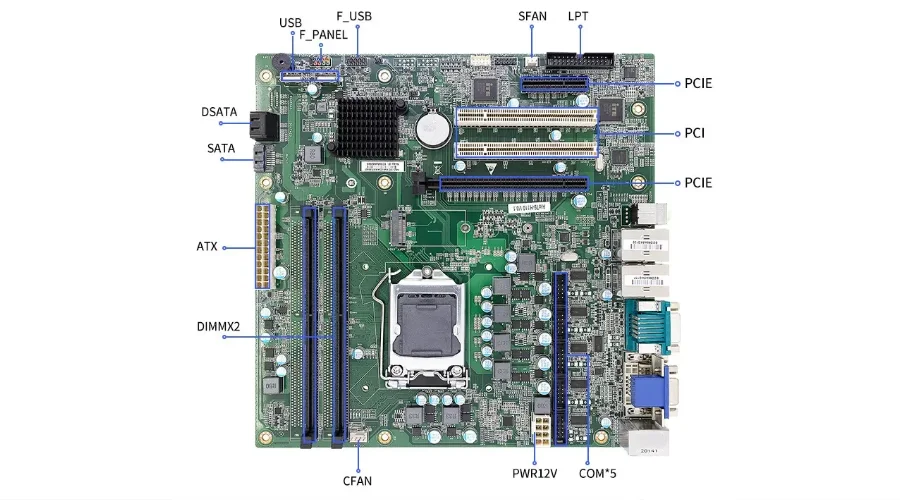
Computing PCB
Manufacturing Challenges and Advanced Solutions for HPC PCBs
Manufacturing high-layer HPC PCBs presents significant technical challenges that require specialized processes and rigorous quality control. These boards are critical for AI servers, GPU clusters, and high-speed optical modules, where routing density, signal isolation, and power integrity demand precision beyond traditional PCB production.
Layer Registration Accuracy
As PCB layer counts increase and feature sizes shrink, layer registration tolerances must be measured in micrometers to maintain proper via alignment and signal integrity. Achieving this requires advanced imaging systems, strict environmental control, and continuous process monitoring throughout fabrication.
Microvia Formation and Metallization
Forming and metallizing microvias is another key challenge. Laser drilling combined with sequential lamination improves via reliability and reduces solder joint fatigue. Precise control of laser parameters ensures consistent via geometry while avoiding thermal damage to surrounding materials.
Copper Plating Uniformity
Uniform copper plating across high-aspect-ratio vias is critical for reliable electrical connections. Advanced electroplating chemistry and process control ensure complete via filling, even when via depths exceed ten times their diameter in high-layer HDI PCBs.
Surface Finish Selection
Choosing the right surface finish impacts both yield and long-term reliability. ENIG, OSP, and immersion silver each offer advantages depending on the application. Factors to consider include multiple reflow compatibility, wire bonding needs, and long-term storage stability.
Thermal Management During Manufacturing
Managing thermal stress is essential to prevent warpage and delamination. Differences in the coefficient of thermal expansion (CTE) between materials can cause stress during thermal excursions. Optimized temperature profiles minimize stress while ensuring complete cure and proper metallization.
Comprehensive Quality Control
Quality assurance extends beyond standard electrical tests. Modern HPC PCB manufacturing includes signal integrity verification, thermal cycling tests, and accelerated aging assessments to ensure boards perform reliably under extreme operating conditions.
HPC PCB Applications and System Integration
Advanced HPC PCB technologies serve diverse system architectures, each with unique technical requirements and design challenges. Modern AI servers, GPU clusters, high-speed networking, and edge computing platforms rely on carefully engineered PCBs to ensure performance, reliability, and thermal efficiency.
GPU Servers
GPU server PCBs must support multiple high-power graphics processors while managing substantial thermal loads and high-speed interconnections for parallel computing. For example, the DGX H100 GPU board set includes the GPU carrier board, NVSwitch, OAM, and UBB, with a total PCB value of 15,700 yuan per unit. Each component requires precise design to achieve optimal system performance, reflecting the high complexity and value of AI server PCB implementations.
AI Training and Inference Servers
Training servers demand sustained high-performance operation, emphasizing thermal management and stable power delivery. In contrast, inference servers prioritize low latency and energy efficiency, requiring different PCB design optimizations and careful component selection to meet specific workload needs.
High-Speed Networking Infrastructure
PCBs in high-speed networking applications focus on signal integrity and electromagnetic compatibility. These boards often use specialized materials with controlled dielectric properties and enhanced thermal performance to handle high-frequency signals. Server motherboard assembly must meet precise tolerances to support reliable, high-speed communication.
Edge Computing
Edge computing platforms require compact, power-efficient PCBs capable of operating in challenging environments. Designers must balance performance, power efficiency, and environmental robustness while maintaining small form factors suitable for real-time AI processing.
Optical Interconnect Integration
Integrating optical transceivers adds additional design constraints. PCBs must provide precise alignment, mechanical stability, and thermal management to maintain signal quality while supporting the necessary electrical interfaces for system integration.
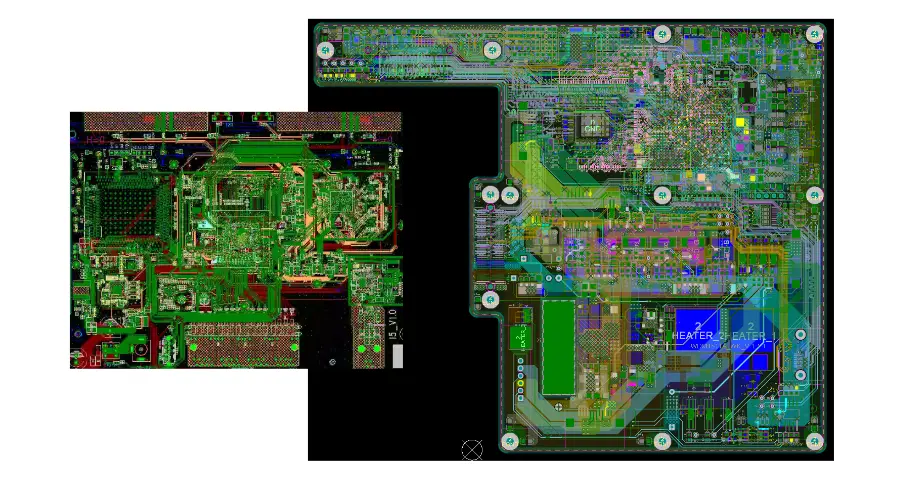
Computing PCB Layout
Future Trends in HPC PCB Technology
The next generation of HPC PCB technology will focus on further miniaturization, enhanced thermal management, and improved signal integrity. As AI and machine learning systems continue to evolve, PCB designs must advance to sustain increasing performance demands while maintaining system reliability and cost efficiency.
Emerging trends include:
- Miniaturization and Form Factor Evolution – More compact multi-layer HDI PCBs and high-density interconnects enable powerful HPC systems within smaller footprints, essential for AI training clusters and edge computing devices.
- Improved Thermal Management Strategies – Advanced materials with superior thermal conductivity and low-loss dielectric properties allow boards to operate reliably at higher frequencies and power densities. Ceramic substrates and metal-core PCBs provide targeted heat dissipation for power-dense applications.
- Enhanced Signal Integrity and High-Frequency Performance – Continued refinement of microvia, sequential lamination, and embedded component technologies ensures stable high-speed signal transmission across complex HPC PCB stackups.
- Integration with AI and Machine Learning Systems – PCB designs increasingly accommodate specialized processor and memory interfaces, optical interconnects, and embedded components to optimize performance for AI workloads.
These future trends highlight the evolving demands of HPC PCBs, underscoring the importance of advanced manufacturing techniques and materials to meet next-generation computing requirements.
Advanced HPC PCB Manufacturing Capabilities of Haoyue Electronics
Modern HPC PCB manufacturing relies on state-of-the-art processes and materials to deliver reliable, high-performance boards for AI servers, GPU clusters, and high-speed networking systems.
Haoyue Electronics provides comprehensive capabilities across these advanced manufacturing technologies, offering complete solutions from design consultation through final assembly and testing. Our expertise includes:
- Emerging Materials and Thermal Solutions – High-performance prepregs and ceramic/metal-core substrates ensure reliable high-frequency operation and efficient heat dissipation.
- Innovations in Via Formation – Laser-drilled microvias and filled vias enable higher routing density while maintaining mechanical and thermal reliability.
- Embedded Component Integration – Passive and active components integrated into the PCB stackup reduce system size and improve electrical performance.
- Quality Assurance Advancements – Real-time monitoring, advanced inspection, and comprehensive testing ensure high yield and consistent quality.
Haoyue Electronics leverages these capabilities to deliver high-layer HDI PCB solutions that meet the performance, reliability, and scalability requirements of modern HPC applications, while maintaining cost-effectiveness.