
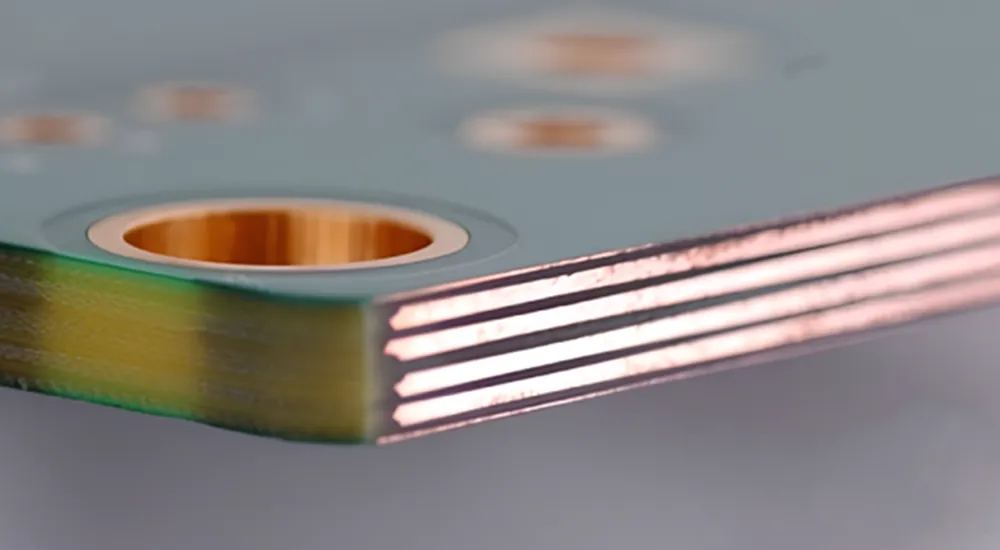
As electronic systems demand higher power densities and improved thermal performance, heavy copper PCB design has emerged as a critical solution for engineers working with high-current applications. Unlike standard printed circuit boards that typically use 1-2 oz copper weights, heavy copper PCBs utilize copper thicknesses of 3 oz per square foot and beyond, with some applications requiring up to 20 oz or more.
The fundamental challenge in heavy copper PCB design lies in balancing electrical performance, thermal management, and manufacturing constraints while maintaining reliability across demanding operating conditions. This comprehensive guide examines the essential design principles that ensure successful implementation of heavy copper technology in modern electronic systems.
Understanding Heavy Copper PCB Fundamentals
Defining Heavy Copper Standards
Heavy copper PCBs are characterized by copper foil thicknesses greater than 2 oz per square foot (70 micrometers), with common weights including 3 oz, 4 oz, 6 oz, and extending up to 20 oz for extreme applications. This increased copper thickness provides several key advantages: increased current carrying capacity, improved heat dissipation, lower voltage drops across traces, and increased mechanical durability.
The relationship between copper weight and thickness follows established industry standards, where 1 oz copper equals approximately 1.4 mils (35 micrometers) in thickness. This measurement system enables engineers to specify appropriate copper weights based on current carrying requirements and thermal constraints.
Applications Driving Heavy Copper Adoption
Heavy copper PCBs find extensive application in military weapons control systems, automotive rail track systems, power distribution equipment, and transportation power converters. These applications share common requirements for high reliability, elevated current handling, and operation in harsh environmental conditions where standard copper weights would prove inadequate.
Critical Design Principles for Heavy Copper PCB Success
Current Carrying Capacity and Trace Width Calculations
The foundation of effective heavy copper PCB design rests on accurate current carrying capacity calculations. Engineers must follow IPC-2221 standards when determining trace widths, using the formula that relates cross-sectional area to desired temperature rise and average current.
The IPC-2221 formula for external traces is:
A = (I / (k × ΔT^0.44))^(1/0.725)
Where:
- A = Cross-sectional area in square mils
- I = Maximum current in amperes
- k = Constant (0.024 for external layers, 0.048 for internal layers)
- ΔT = Temperature rise above ambient in °C
For high-current applications, a practical approach involves using 2 oz or 3 oz copper thickness, with external layer traces having better cooling due to air exposure compared to internal traces that retain more heat.
Trace Width and Spacing Considerations
Heavy copper applications require careful attention to trace geometry beyond standard PCB design rules. Minimum trace widths should not be less than 0.3mm, with adjacent wire spacing maintained at no less than 0.25mm. During manufacturing of heavy copper circuits, significant plating thicknesses require allowances in defining trace separations and pad sizes, making early collaboration with the board fabricator essential.
The etching process presents unique challenges for heavy copper designs. When copper thickness exceeds standard weights, etching time increases significantly, causing side etching that creates traces with smaller top widths than bottom widths, reducing effective copper volume for current transfer. Designers must implement trace width compensation to ensure final dimensions meet specifications.
| Copper Weight | Minimum Trace Width | Recommended Spacing | Typical Application |
|---|---|---|---|
| 3 oz | 0.3mm | 0.25mm | Power supplies |
| 6 oz | 0.4mm | 0.35mm | Motor drives |
| 10 oz | 0.5mm | 0.5mm | High-power converters |
| 20 oz | 0.8mm | 0.8mm | Extreme current applications |
Thermal Management Through Heavy Copper PCB Design
Effective thermal management represents a cornerstone of successful heavy copper PCB design. Engineers must design copper thicknesses that can carry maximum expected current without exceeding acceptable temperature rise, often using Finite Element Analysis (FEA) simulations to predict temperature distribution around trace layouts.
Thermal Via Implementation
Thermal vias provide low thermal resistance paths from component locations to internal copper planes or external heat sinks, with optimal diameters ranging from 0.2mm to 0.4mm and via-to-via spacing of 1-1.2mm. For maximum thermal conductivity, the optimal via diameter is 0.30mm with 0.80mm via-to-via spacing.
Thermal via arrays should be positioned directly under heat-generating components, connecting to large copper planes to distribute heat effectively and reduce hotspots. The combination of heavy copper layers and strategic thermal via placement creates an effective heat dissipation network throughout the PCB structure.
Copper Plane Optimization
Large copper planes in heavy copper PCBs increase the useful surface area for heat dissipation, with the best results achieved when copper planes are implemented on both upper and lower layers where heat exchange with the environment is maximized. Thicker copper layers can reduce temperature rise by 10-20°C under heavy loads compared to standard copper weights.
Material Selection for Heavy Copper Applications
Substrate material selection becomes critical in heavy copper PCB design due to the increased thermal stresses and operating temperatures involved. While FR-4 remains suitable for many applications with its 130°C operating temperature, engineers should consider materials with higher glass transition temperatures (Tg) such as polyimide and ceramic substrates for high-temperature applications.
RTF (Reverse Treated Foils) copper foil is typically preferred for heavy copper PCB manufacturing due to its superior heat resistance, corrosion resistance, and ability to carry larger currents and voltages. The lower Ra value of RTF compared to standard copper makes it particularly suitable for high-pressure applications.
Manufacturing Considerations in Heavy Copper PCB Design
Lamination Process Challenges
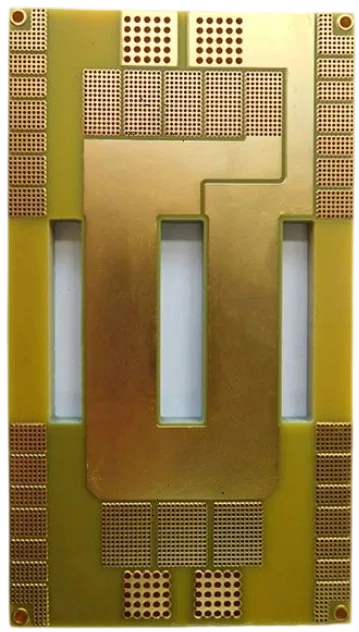
The lamination process requires multiple high resin content prepreg layers to fill spaces created by thick copper etching, which can cause total thickness variations and potential voiding if insufficient prepreg is used. Excessive prepreg usage may cause total thickness or dielectric thickness to exceed specifications, while high resin flow during lamination can cause inner layer shifting.
Advanced manufacturing techniques address these challenges through controlled resin application and specialized lamination cycles designed for heavy copper constructions.
Design for Manufacturing Guidelines
Successful heavy copper PCB design requires adherence to specific design for manufacturing (DFM) principles:
- Implement appropriate etch compensation factors based on copper thickness
- Design test coupons for impedance and current carrying verification
- Specify adequate drilling and routing tolerances for thick copper
- Plan for potential layer registration shifts during lamination
- Consider via fill requirements for thermal and electrical performance
Quality Assurance and Testing Protocols
Electrical Testing Requirements
High potential testing (Hi-Pot Test) becomes particularly important in heavy copper designs, requiring attention to material selection, multilayer stack-up, inner layer cleanliness, etching quality, and design parameters to achieve adequate insulation resistance.
Current carrying capacity verification through controlled testing ensures that designed trace widths meet actual performance requirements under operational conditions.
Thermal Performance Validation
Thermal testing protocols should include:
- Temperature rise measurements under rated current loads
- Thermal cycling tests to verify material stability
- Hot spot identification through thermal imaging
- Long-term reliability assessment under thermal stress
Advanced Heavy Copper PCB Design Techniques
Hybrid Copper Weight Implementation
Modern heavy copper PCB technology enables mixing standard circuits with thick copper on a single board, achieving reduced layer count, area savings, low impedance power distribution, and cost savings. This approach allows fine-pitch components on outer layers while maintaining heavy copper power distribution in inner layers.
Power Distribution Network Optimization
Effective power distribution in heavy copper PCB design involves strategic placement of decoupling capacitors, minimization of power loop inductance, and implementation of low-impedance power planes. The reduced resistance of heavy copper traces contributes to improved power delivery network performance.
Haoyue Electronics: Your Heavy Copper PCB Partner
The complexity of heavy copper PCB design demands partnership with experienced manufacturers who understand both the technical challenges and quality requirements of high-performance applications. Haoyue Electronics brings extensive expertise in heavy copper PCB manufacturing and assembly, combining advanced production capabilities with comprehensive design support services.
Why Choose Haoyue for Heavy Copper PCB?
- Copper Thickness Capability
- Supports standard to extreme copper weights, including 3 oz, 6 oz, 10 oz, and up to 20 oz or more
- Multi-layer heavy copper stack-ups with precise trace compensation
- Advanced Manufacturing Equipment
- High-power etching and plating systems optimized for thick copper
- Specialized lamination process for resin flow and void prevention
- CNC drilling and routing systems with tight tolerance control for thick layers
- Design Support and DFM Expertise
- Full support for IPC-2221-based trace width and current-carrying calculations
- Guidance on thermal via placement, copper balancing, and hybrid copper stackups
- Custom stack-up design tailored to thermal and mechanical performance requirements
- Thermal and Electrical Performance Assurance
- In-house thermal simulation and FEA for heat distribution modeling
- Hi-Pot, thermal cycling, and current load testing to ensure long-term reliability
- Comprehensive test coupons and trace validation for quality assurance
- Industries Served
- Automotive electronics (motor control, EV battery systems)
- Power electronics (inverters, converters, distribution systems)
- Industrial automation and high-current motion control
- Renewable energy systems and heavy equipment
Frequently Asked Questions
1. What is the difference between heavy copper and extreme copper PCBs?
Heavy copper PCBs typically use copper weights between 4 oz/ft² to 20 oz/ft², while extreme copper applications can extend up to 200 oz/ft² for specialized high-current applications. The choice depends on current carrying requirements and thermal management needs.
2. How does copper thickness affect trace width requirements?
Thicker copper allows narrower traces for the same current carrying capacity due to the larger cross-sectional area available for current flow. However, manufacturing constraints and thermal considerations may still require wider traces than theoretical calculations suggest.
3. What are the key manufacturing challenges in heavy copper PCB production?
Primary challenges include controlling side etching during the pattern formation process, managing resin flow during lamination, and maintaining layer registration accuracy with thick copper features. These challenges require specialized manufacturing processes and experienced fabrication partners.
4. When should I consider heavy copper PCB design over standard copper weights?
Heavy copper design becomes necessary when current requirements exceed the safe carrying capacity of standard copper weights, when improved thermal performance is critical, or when enhanced mechanical durability is required for harsh operating environments.