
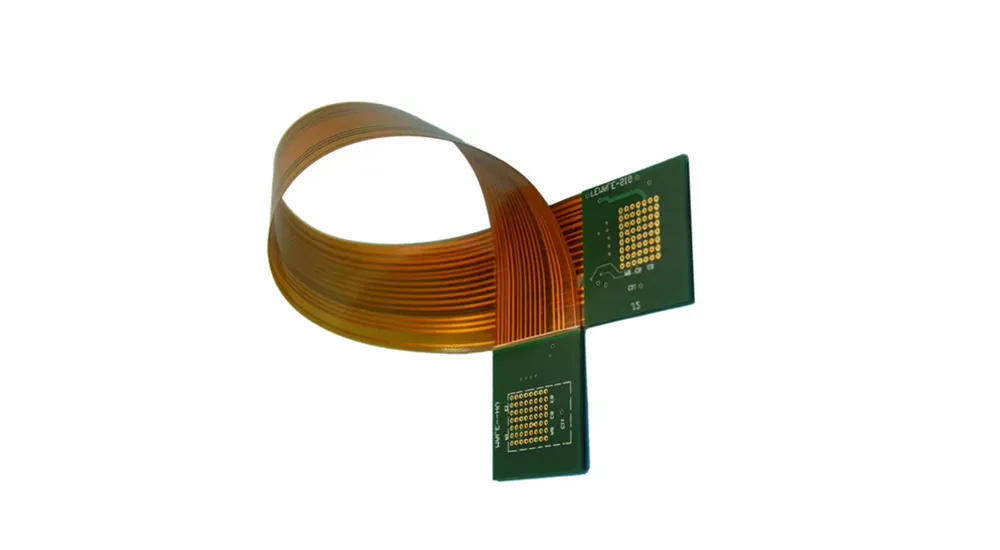
Unlike conventional ribbon cables or wire assemblies, flexible PCB cables integrate the precision of printed circuit technology with the mechanical adaptability required for modern electronic devices. This combination delivers superior signal integrity, reduced electromagnetic interference, and enhanced reliability in applications ranging from smartphones to aerospace systems.
Technical Specifications and Materials Engineering
Substrate Materials and Properties
The foundation of any high-performance flexible PCB cable lies in its substrate material selection. Polyimide films, particularly those conforming to IPC-4203 standards, serve as the primary dielectric material due to their exceptional thermal stability and mechanical properties.
Key Substrate Characteristics:
- Polyimide base materials with dielectric constants ranging from 3.2 to 3.5
- Operating temperature ranges from -55°C to +200°C
- Tear strength exceeding 70 N/mm for dynamic flexing applications
- Moisture absorption rates below 2.5% for environmental stability
Advanced applications often utilize liquid crystal polymer (LCP) substrates, which offer superior dimensional stability and lower dielectric loss tangent values of 0.002 at 10 GHz. These materials prove essential for high-frequency applications requiring minimal signal degradation across extended transmission lengths.
Adhesive systems play a crucial role in multilayer flexible PCB cable construction. Acrylic-based adhesives provide excellent chemical resistance and thermal cycling performance, while adhesiveless constructions using thermoplastic polyimide offer reduced thickness profiles and improved electrical characteristics.
Conductor Configuration and Layer Stack-up
The electrical performance of flexible PCB cables depends heavily on conductor geometry and layer arrangement. Rolled annealed copper foil, typically ranging from 9 to 70 micrometers in thickness, provides optimal flexibility while maintaining current-carrying capacity.
| Copper Weight | Thickness (μm) | Current Capacity (A) | Flex Cycles |
|---|---|---|---|
| 0.25 oz | 9 | 0.5–1.0 | >1,000,000 |
| 0.5 oz | 18 | 1.0–2.0 | >500,000 |
| 1.0 oz | 35 | 2.0–4.0 | >100,000 |
| 2.0 oz | 70 | 4.0–8.0 | >50,000 |
Design Considerations and Manufacturing Excellence
Mechanical Design Parameters
Successful flexible PCB cable design requires careful consideration of mechanical stress distribution and bend radius limitations. The minimum bend radius generally equals six times the total cable thickness for static applications, while dynamic flexing applications require radius calculations of ten to twenty times the thickness.
Critical Design Guidelines:
- Trace routing should follow curved paths rather than sharp angles to minimize stress concentration
- Tear stops and reinforcement features prevent crack propagation during handling
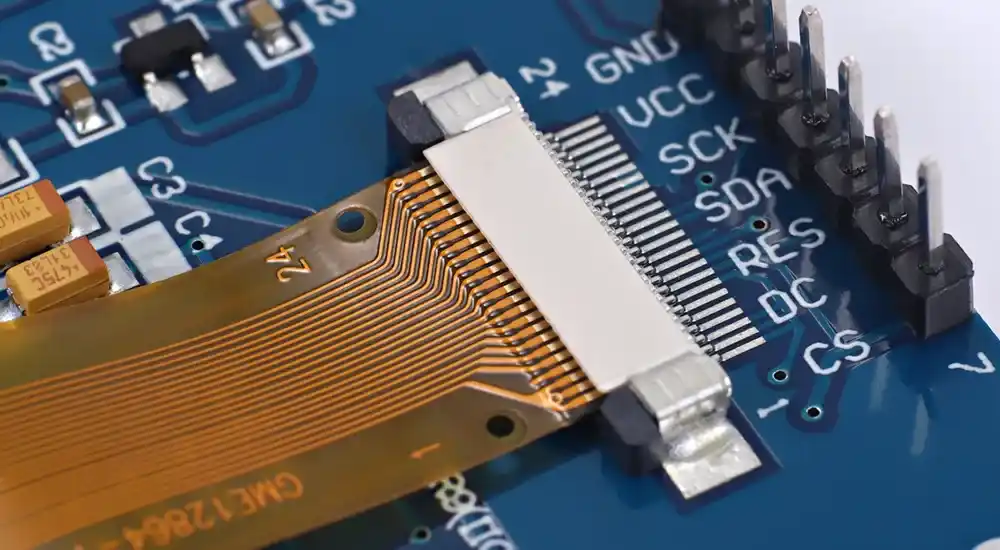
- Stiffener placement at connector interfaces ensures reliable mating and unmating cycles
- Ground plane segmentation reduces stress while maintaining electromagnetic shielding
Coverlay materials, typically polyimide films with acrylic adhesives, provide essential protection while maintaining flexibility. The coverlay opening design must account for thermal expansion differences and allow adequate solder mask coverage for component attachment areas.
Electrical Performance Characteristics
High-frequency signal transmission through flexible PCB cables demands precise control of electrical parameters. Characteristic impedance stability across the flex region requires careful consideration of dielectric thickness variations and conductor geometry changes during bending.
Performance Specifications:
- Insertion loss: <0.1 dB/inch at 1 GHz for properly designed transmission lines
- Crosstalk: <-40 dB between adjacent differential pairs with appropriate spacing
- Rise time degradation: <5% for signals with edge rates faster than 1 ns
- EMI shielding effectiveness: >60 dB with continuous ground plane implementation
Thermal management becomes critical in high-current applications. The thermal resistance of flexible PCB cables typically ranges from 150 to 300°C/W per square inch, requiring careful power dissipation analysis and potential heat sinking consideration.
Industry Applications and Performance Benefits
Consumer Electronics and Mobile Devices
The consumer electronics sector drives significant innovation in flexible PCB cable technology. Smartphone camera modules utilize precision flexible interconnects to enable optical image stabilization and zoom functionality within extremely compact form factors.
Modern tablet computers employ flexible PCB cables for display connectivity, keyboard interfaces, and internal component interconnections. These applications demand ultra-thin profiles, often less than 0.1mm total thickness, while maintaining signal integrity for high-resolution display data transmission.
Wearable devices present unique challenges requiring flexible PCB cables that withstand continuous flexing during normal use. Fitness trackers and smartwatches utilize specially designed flexible interconnects with enhanced fatigue resistance, capable of surviving millions of flex cycles without performance degradation.
Industrial and Automotive Applications
Automotive electronics increasingly rely on flexible PCB cables for dashboard assemblies, infotainment systems, and advanced driver assistance system (ADAS) components. These applications require compliance with AEC-Q200 qualification standards and operation across extended temperature ranges from -40°C to +125°C.
Industrial automation systems utilize flexible PCB cables in robotic arms, conveyor systems, and rotating machinery where traditional wiring would fail due to mechanical stress. Cable designs for these applications often incorporate specialized shield configurations and enhanced strain relief features.
Medical device applications demand the highest reliability standards, with flexible PCB cables used in implantable devices, diagnostic equipment, and surgical instruments. Biocompatibility requirements and sterilization compatibility drive material selection and design optimization for these critical applications.
Quality Standards and Manufacturing Expertise
Testing and Reliability Standards
Comprehensive testing protocols ensure flexible PCB cable performance and reliability. Standard test methods include IPC-2223 sectional design guidelines and IPC-6013 qualification requirements for flexible printed boards.
Essential Test Parameters:
- Bend testing per IPC-2223: 90-degree bends with specified radius and cycle counts
- Environmental testing: thermal cycling, humidity exposure, and chemical resistance
- Electrical testing: impedance verification, insulation resistance, and dielectric withstand voltage
- Mechanical testing: peel strength, tensile strength, and fatigue resistance
Accelerated life testing simulates years of service life through controlled stress application. Temperature cycling between -55°C and +125°C, combined with mechanical flexing, provides confidence in long-term reliability performance.
Manufacturing Best Practices
Advanced manufacturing techniques ensure consistent quality and performance in flexible PCB cable production. Controlled impedance testing during fabrication verifies electrical specifications, while automated optical inspection detects potential defects before final assembly.
Process control during lamination cycles maintains precise thickness control and adhesion strength. Clean room environments prevent contamination that could affect electrical performance or long-term reliability.
Conclusion
Flexible PCB cables continue to evolve as enabling technologies for next-generation electronic systems. The combination of advanced materials, precision manufacturing, and rigorous testing ensures reliable performance in demanding applications across multiple industries.
At Haoyue Electronics, we specialize in manufacturing high-quality flexible PCB cables that meet the most stringent performance requirements. Our state-of-the-art production facilities and experienced engineering team deliver custom solutions optimized for your specific application needs. From prototype development through volume production, we provide comprehensive support to ensure your project success.
Contact our technical team today to discuss how our advanced flexible PCB cable solutions can enhance your product design and manufacturing efficiency. Our commitment to quality and innovation makes us your trusted partner for critical interconnect applications.