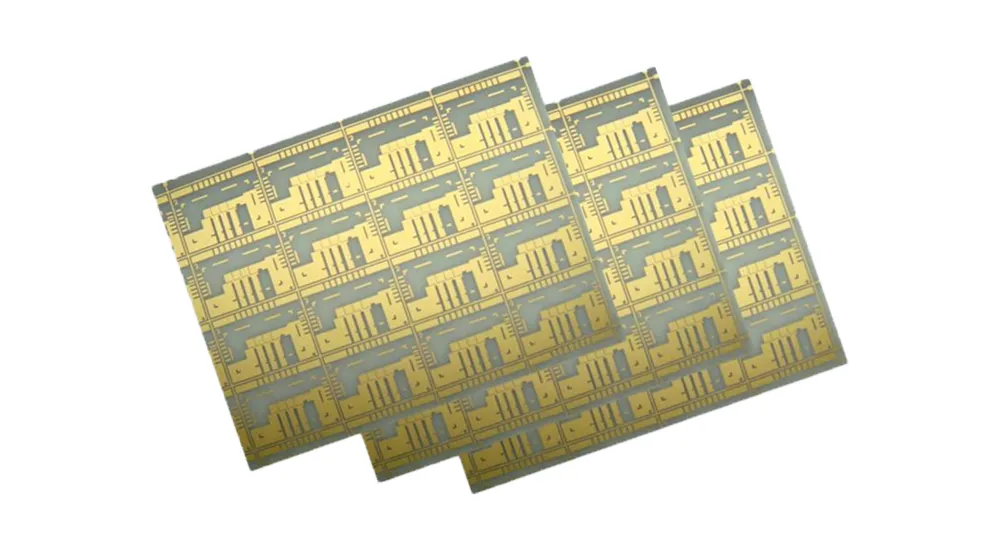
Ceramic printed circuit boards represent a critical advancement in electronics manufacturing, addressing the growing demands for thermal management in high-power applications. Unlike traditional FR4 substrates, ceramic PCBs utilizing aluminum oxide (Al₂O₃) and aluminum nitride (AlN) materials provide exceptional thermal conductivity and dimensional stability. This manufacturing process requires specialized techniques that differ significantly from conventional PCB production methods.
Ceramic PCB Manufacturing Process
The ceramic PCB manufacturing process encompasses several critical stages that demand precise control and specialized equipment. The foundation begins with ceramic substrate preparation, where high-purity ceramic powders undergo careful processing to achieve optimal material properties.
Substrate Formation and Conditioning
Initial substrate preparation involves mixing ceramic powders with organic binders and plasticizers to create a homogeneous slurry. The composition typically contains 90-96% ceramic powder with carefully controlled particle size distribution. Tape casting technology produces uniform thickness sheets ranging from 0.25mm to 2.0mm, with thickness tolerances maintained within ±10 micrometers.
The green ceramic sheets undergo controlled drying at temperatures between 80-120°C to remove solvents while preventing cracking or warping. Critical process parameters include humidity control below 50% and controlled cooling rates to minimize internal stress formation. Surface preparation involves precision grinding to achieve Ra values below 0.4 micrometers, essential for subsequent metallization adhesion.
High-Temperature Sintering Operations
Sintering represents the most critical phase in ceramic substrate manufacturing, transforming the green ceramic into a dense, mechanically robust substrate. The process occurs in controlled atmosphere furnaces at temperatures ranging from 1350-1650°C, depending on the ceramic composition.
Temperature profiles require precise control with heating rates typically limited to 2-5°C per minute during critical transition zones. Atmosphere control prevents oxidation of metallic components while ensuring complete organic burnout. Sintering schedules extend 12-24 hours for thick substrates, with cooling rates controlled to prevent thermal shock and maintain dimensional accuracy within ±0.1%.
Advanced Metallization Technologies
Metallization of ceramic substrates presents unique challenges due to thermal expansion coefficient mismatches and adhesion requirements. Modern ceramic PCB manufacturing employs multiple metallization approaches, each optimized for specific performance requirements.
Screen Printing and Thick Film Processing
Screen printing technology applies metal pastes containing precious metals, typically silver, gold, or platinum, mixed with glass frits and organic vehicles. Paste rheology requires careful optimization to achieve consistent print thickness between 10-25 micrometers while maintaining edge definition better than ±25 micrometers.
Firing profiles for thick film metallization involve peak temperatures of 850-950°C with controlled heating rates of 20-50°C per minute. The glass frit content, typically 2-8% by weight, provides mechanical bonding to the ceramic substrate while maintaining electrical continuity. Multiple print and fire cycles may be required to achieve target thickness and conductivity specifications.
Thin Film Deposition Methods
Thin film metallization utilizes physical vapor deposition or sputtering techniques to create highly controlled metal layers. Titanium-tungsten adhesion layers, typically 100-500 nanometers thick, provide excellent bonding to ceramic substrates before applying copper or gold conductor layers.
Process parameters include substrate temperatures of 150-300°C during deposition, chamber pressures below 10⁻⁶ torr, and deposition rates controlled to 1-5 nanometers per second. Film thickness uniformity better than ±5% across substrate areas up to 100mm × 100mm requires precise target-to-substrate geometry and rotation mechanisms.
Via Formation and Filling Techniques
Via formation in ceramic PCBs requires specialized approaches due to material hardness and brittleness. Laser drilling, mechanical drilling, and punching techniques each offer distinct advantages for different via geometries and production volumes.
Laser Drilling Technologies
CO₂ and UV laser systems provide precise via formation with diameters ranging from 50-500 micrometers. Laser parameters including pulse energy, frequency, and focusing optics determine hole quality and taper characteristics. Typical aspect ratios achieve 8:1 for through-holes while maintaining sidewall roughness below 2 micrometers.
Heat-affected zones require minimization through optimized pulse parameters and assist gas selection. Debris removal involves ultrasonic cleaning in deionized water followed by plasma treatment to improve via wall metallization adhesion. Via filling employs conductive pastes or electroplating techniques depending on electrical requirements.
Mechanical Drilling Considerations
Tungsten carbide and diamond-coated drill bits enable mechanical via formation for larger diameter requirements. Spindle speeds typically range from 80,000-150,000 RPM with feed rates optimized to prevent chipping or cracking. Coolant selection prevents thermal damage while maintaining dimensional accuracy within ±10 micrometers.
Entry and exit material support prevents ceramic chipping during breakthrough. Drill bit wear monitoring ensures consistent hole quality throughout production runs. Via cleaning removes ceramic debris through ultrasonic agitation and chemical etching when necessary.
Thermal Management Challenges and Solutions
Ceramic PCB manufacturing must address thermal expansion coefficient mismatches between ceramic substrates and metallic conductors. Aluminum oxide exhibits thermal expansion coefficients of 6-8 ppm/°C while copper conductors expand at 17 ppm/°C, creating significant stress during thermal cycling.
Coefficient of Thermal Expansion Matching
Advanced metallization systems incorporate buffer layers or alternative conductor materials to minimize thermal stress. Tungsten conductors, with thermal expansion coefficients of 4.5 ppm/°C, provide better matching to ceramic substrates for extreme temperature applications. Heavy copper PCB manufacturing techniques may be adapted using specialized copper alloys with reduced thermal expansion.
Layer thickness optimization reduces absolute dimensional changes while maintaining electrical performance. Conductor pattern design incorporates stress relief features including serpentine traces and expansion joints in critical areas. Thermal cycling qualification testing validates design approaches under operational temperature ranges.
Advanced Thermal Interface Solutions
Thermal via arrays enhance heat dissipation from active components to ceramic substrate thermal masses. Via density optimization balances thermal performance with manufacturing feasibility, typically achieving 20-40 vias per square millimeter in high-heat-flux regions. Thermal interface materials require compatibility with ceramic surfaces and high-temperature processing conditions.
Embedded heat spreaders utilize thick film or sintered metal layers to distribute heat laterally across ceramic substrates. Integration requires careful thermal expansion matching and process sequence optimization to prevent delamination or cracking during thermal cycling.
Quality Control and Process Optimization
Ceramic PCB manufacturing requires comprehensive quality control systems addressing material properties, dimensional accuracy, and electrical performance. Statistical process control monitors critical parameters throughout production sequences.
Dimensional Metrology and Inspection
Coordinate measurement machines equipped with ceramic-compatible probes verify substrate dimensions and feature locations within specified tolerances. Optical measurement systems evaluate surface finish, via quality, and metallization coverage. Edge definition measurements ensure conductor line width and spacing meet design requirements.
Thermal cycling stress testing validates long-term reliability under operational conditions. Electrical testing includes continuity verification, insulation resistance measurement, and high-frequency characterization when applicable. Failure analysis protocols identify process improvements and prevent quality issues.
Advanced Manufacturing at Haoyue Electronics
Successful ceramic PCB manufacturing requires specialized expertise and advanced process control capabilities. Haoyue Electronics combines precision manufacturing techniques with comprehensive quality systems to deliver high-performance ceramic PCBs for demanding applications.
Our ceramic PCB manufacturing capabilities encompass the complete process chain from substrate preparation through final testing. Key manufacturing strengths include:
- High-temperature sintering furnaces with precise atmosphere control and thermal profiling
- Advanced metallization systems supporting both thick film and thin film deposition processes
- Precision laser drilling equipment for complex via geometries and high aspect ratios
- Specialized heavy copper PCB processing techniques adapted for ceramic substrates
- Comprehensive quality control systems ensuring dimensional accuracy and electrical performance
- Thermal cycling qualification testing validating long-term reliability requirements
For applications demanding superior thermal management and electrical performance, our ceramic PCB manufacturing expertise delivers solutions that meet the most stringent technical requirements. Contact our engineering team to discuss your specific ceramic PCB manufacturing needs and explore how our advanced production capabilities can support your next-generation electronic designs.