
Introduction
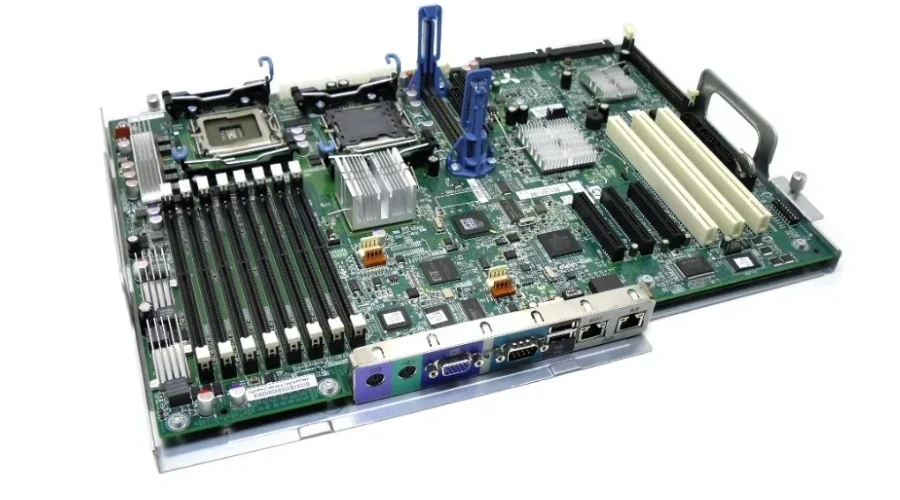
The rise of artificial intelligence is reshaping AI computing hardware PCB manufacturing. Systems such as GPU servers, AI accelerators, and edge computing modules now require PCBs that deliver far beyond traditional capabilities. Unlike general-purpose boards, AI computing hardware PCBs must handle multi-gigabit signal speeds, high power density, and extreme thermal loads. This article highlights the advanced manufacturing solutions that make these performance levels possible.
Core Challenges in AI Hardware PCB Design
Parallel Computing and High-Speed Interconnects
AI accelerators and GPU servers rely on massive parallel processing, which drives the need for dense, high-speed interconnects. PCB designs must support thousands of differential pairs operating beyond 25 GHz while preserving signal integrity across complex routing topologies. To achieve this, AI server PCB manufacturing often requires advanced stackups that handle dense routing, control impedance consistently, and minimize crosstalk between parallel data streams.
Memory Bandwidth and Low-Latency Communication
Modern AI workloads demand enormous memory bandwidth, particularly for DDR5 and High Bandwidth Memory (HBM). PCB layouts must ensure tightly controlled trace geometries, minimal via transitions, and precise reference planes to maintain timing accuracy measured in fractions of a picosecond. Low-latency protocols add further constraints, requiring designs that minimize propagation delay while maintaining stable transmission under varying operating conditions.
Power Density and Power Integrity
AI accelerators can exceed 400 W per square inch, creating extreme challenges for power delivery. The PCB must maintain low-noise power integrity across multiple voltage domains while responding to rapid load changes. Heavy copper layers, optimized power planes, and strategic decoupling are essential for reliable PDN design. These techniques ensure stable voltage levels and reduce ripple, which is critical for AI workloads.
Thermal Management and Reliability
Thermal stress is one of the most critical issues in AI hardware PCB design. Heat concentration from processors requires PCB materials and structures that efficiently dissipate heat without sacrificing electrical performance. Reliability under continuous high-power operation is equally important. Materials must withstand long-term thermal cycling while maintaining dimensional stability and electrical consistency.
Scalability and Chiplet Support
The move toward chiplet architectures introduces new PCB design requirements. Boards must provide flexible interconnects that accommodate multiple chiplet configurations while sustaining both signal integrity and power delivery. Scalability is a key design priority—allowing AI hardware to expand in performance without compromising current-generation requirements.
High-Performance Materials and Thermal Management Solutions
Low-Loss Material Selection
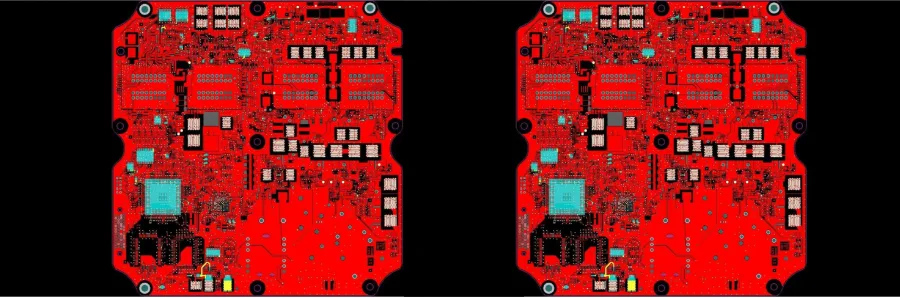
Next-generation AI computing PCB applications require materials that minimize signal loss while enhancing thermal stability. Leading suppliers such as Rogers, Isola, and Megtron provide laminate systems engineered for high-frequency, high-power workloads. These materials feature:
- Low dielectric constants (Dk)
- Minimal loss tangents (Df)
- Higher thermal conductivity than standard FR-4
Examples include Rogers RO4000 series, Isola I-Speed, and Megtron 6, which combine superior electrical properties with reliable thermal performance for AI hardware PCB manufacturing.
Thermal Conductivity Comparison
| PCB Type | Thermal Conductivity (W/mK) | Operating Temp (°C) | Applications |
|---|---|---|---|
| Standard PCB | 0.3 – 0.4 | -40 to +130 | General computing |
| AI Hardware PCB | 1.0 – 2.0 | -55 to +150 | GPU servers, AI accelerators |
| High-Performance AI PCB | 3.0 – 5.0 | -65 to +175 | Advanced AI processing |
This comparison highlights the gap between conventional PCBs and AI-focused designs, where higher conductivity is critical for heat dissipation.
Advanced Thermal Management Measures
To manage the extreme heat generated by AI processors, PCB designs now integrate multiple strategies:
-
Copper coin technology – Embedding copper blocks within the stackup to provide direct thermal paths to external cooling.
-
Thermal via arrays – High-density, filled, and capped vias that lower thermal resistance and transfer heat vertically.
-
Liquid cooling interfaces – Embedded cooling channels that allow liquid circulation while preserving electrical isolation.
-
Distributed cooling layers – Integrated thermal channels across the substrate to balance heat and eliminate hot spots.
These thermal management solutions for AI PCBs ensure long-term reliability, even under continuous, high-power workloads.
High-Speed Signal Integrity and Power Distribution
Signal Integrity Optimization
AI PCB design at high frequencies requires meticulous signal integrity control across all interconnects. Differential pair routing with tight impedance matching is essential for reliable high-speed data transmission. The routing topology must reduce reflections, crosstalk, and EMI while maintaining consistent electrical characteristics.
Key optimization techniques include:
-
Back-drilling via stubs to reduce parasitic effects
-
Controlled-depth drilling for precise layer transitions
-
Optimized return path management
-
Advanced via filling and plating for stable high-frequency behavior
These methods ensure clean signal transmission in high-speed AI hardware PCB manufacturing.
Power Distribution Network and Power Integrity
AI accelerators demand multi-phase PDN architectures capable of supporting multiple voltage domains and rapid load changes. Stable power delivery requires low-noise operation, minimal ripple, and fast transient response.
Critical considerations include:
-
Strategic decoupling capacitor placement for broadband impedance control
-
Low-inductance power planes with controlled impedance
-
Optimized current return paths for reduced voltage drop
These power integrity solutions ensure stable operation under the extreme switching loads typical of AI processing.
Testing and Verification Methods
High-speed signal integrity testing validates PCB performance before system integration. Key methods include:
-
Time Domain Reflectometry (TDR): Detects impedance discontinuities and signal path quality.
-
Vector Network Analyzer (VNA): Measures insertion loss and frequency-dependent characteristics.
-
Eye Diagram Analysis: Evaluates real-world signal quality, jitter, and noise margins.
Together, these testing techniques establish confidence in AI hardware PCB electrical performance under demanding operating conditions.
AI Accelerator and Chiplet Integration Processes
High-Density Packaging Challenges
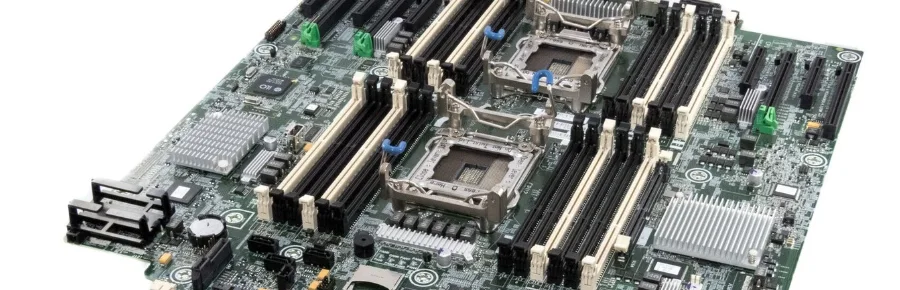
Integrating AI accelerators requires packaging solutions that balance extremely high I/O density with electrical and thermal reliability. Key challenges include:
-
Fine-pitch BGA packages – demanding micron-level PCB manufacturing precision.
-
System-in-Package (SiP) – requiring advanced HDI PCB design for AI servers with multi-layer build-up and complex via structures.
-
Flip-chip mounting – minimizing parasitics for high-frequency performance.
-
Through-Silicon Vias (TSVs) – enabling 3D interconnects to maximize performance in compact AI hardware form factors.
These packaging approaches highlight the need for advanced AI accelerator PCB manufacturing capabilities.
Chiplet Interconnects and Interface Optimization
Chiplet-based AI architectures depend on PCB interconnects that support next-generation standards such as PCIe 6.0, NoC protocols, and HBM memory interfaces. To achieve this, PCB designs must ensure:
-
Controlled impedance and minimal skew across dense routing.
-
Via-in-pad PCB structures with filled vias, controlled-depth drilling, and precision finishing.
-
Signal integrity maintained under extreme data rates and power levels.
Custom high-speed interfaces developed for AI workloads often exceed conventional PCB design rules, requiring specialized laminates, low-loss dielectrics, and precision fabrication.
Advanced PCB Manufacturing Processes and Advantages
HDI Stackup Implementation
HDI stackup technology provides the routing density required for AI PCB design. Blind vias, buried vias, and microvias enable complex interconnects within compact layouts. Sequential build-up processes allow:
-
Precise impedance control across layers
-
High-density signal routing for fine-pitch AI processors
-
Reliable high-frequency performance with consistent electrical characteristics
Via-in-Pad Technology
Via-in-pad PCB design maximizes I/O density by embedding vias directly into component pads. This approach improves electrical performance by:
-
Reducing parasitic inductance
-
Shortening signal paths for high-speed interfaces
-
Eliminating routing constraints in dense BGA and chiplet layouts
To achieve this, manufacturing must incorporate controlled-depth drilling, conductive via filling, and precision surface planarization.
Heavy Copper Design
For AI accelerator PCBs, heavy copper layers are critical to supporting high current demands. Typical designs use 3–6 oz copper per ft² (vs. 1–2 oz in standard PCBs), providing:
-
Lower resistance power distribution
-
Enhanced thermal management
-
Improved reliability under extreme workloads
Specialized plating and uniform copper distribution processes are essential to ensure structural accuracy and long-term performance.
Manufacturing Advantages in Advanced Facilities
Modern AI hardware PCB manufacturing facilities provide unique advantages:
-
Rapid prototyping & scalability – supports fast AI hardware development cycles
-
Specialized material sourcing – Rogers, Isola, Megtron laminates for low-loss, high-frequency applications
-
Quality assurance – compliance with IPC standards, ISO9001, and IATF16949 for mission-critical reliability
These capabilities ensure that advanced AI computing PCB manufacturing can meet both performance and production requirements.
Future Trends in AI Hardware PCB
As AI computing hardware continues to evolve, PCB technology must keep pace to meet the increasing demands for performance, reliability, and scalability. The following trends are expected to shape the next generation of AI hardware PCB design and manufacturing:
- Higher Layer Counts: Supporting greater interconnect density for advanced AI processors.
- Finer Line Widths: Meeting growing I/O requirements and maintaining signal integrity.
- Enhanced Thermal Materials: Improving heat dissipation for escalating power levels.
- Optical Interconnect Integration: Preparing for next-generation data transfer speeds.
- Chiplet and Cooling Innovations: Enabling more efficient AI accelerator designs.
Keeping abreast of these trends is crucial for designers and manufacturers aiming to deliver high-performance, reliable, and cost-effective AI computing hardware solutions.
Conclusion
The evolution of AI computing hardware continues to push the boundaries of PCB technology. From higher layer counts to advanced chiplet integration, each innovation brings stricter requirements for signal integrity, power distribution, and thermal management. Success in AI hardware development depends on selecting PCB partners with proven expertise and advanced manufacturing capabilities.
At Haoyue Electronics, we provide advanced PCB manufacturing and assembly services tailored for AI computing applications. Our core capabilities include:
- HDI stackup implementation with blind/buried vias and microvia technology
- Via-in-pad solutions for fine-pitch AI accelerators and chiplet integration
- Heavy copper PCB design for high-current power delivery
- Signal integrity and power integrity validation with TDR, VNA, and eye diagram testing
- Material expertise with Rogers, Isola, and Megtron laminates
- Certified quality systems (IPC, ISO9001, ISO13485, IATF16949)
If you are developing next-generation AI servers, accelerators, or edge computing platforms, our one-stop PCB manufacturing and assembly services can help accelerate your project timeline and ensure performance consistency. Contact Haoyue Electronics today to learn how we can support your AI hardware innovation.